Forklift Safety Toolbox Talk: 9,000 Pounds Doesn't Forgive Mistakes


A forklift looks slow and simple, and that’s what makes it dangerous. A typical counterbalance truck weighs about three times as much as a car, steers from the rear, carries its load high, and works in aisles full of people on foot. It doesn’t have crumple zones and it doesn’t stop fast.
Most forklift incidents are not exotic. Someone drives with the load high. Someone doesn’t sound the horn at a blind corner. Someone walks behind a reversing truck. A pedestrian and a driver each assume the other one is paying attention. The physics does the rest.
Around a forklift, assume the driver can’t see you — because half the time, they can’t.
Why is forklift safety important?
The Bureau of Labor Statistics counted 614 workers killed in forklift-related incidents from 2011 to 2017 — with more than 7,000 nonfatal injuries involving days away from work every single year. In 2017 alone, forklifts were involved in 9,050 lost-time injuries, and those injuries kept workers off the job a median of 13 days, well above the 8-day median for all injuries.
The deaths cluster in a few patterns: tip-overs, workers struck by trucks, workers struck by falling loads, and workers crushed between the truck and a structure. At Mitchell Industrial Tire in Texas, a forklift operator was killed when a pallet of tires fell from a failed storage rack — and OSHA found the company had put untrained drivers on trucks. The proposed fine was $288,299. The operator paid far more.
OSHA regulations for forklift safety
The standard is 29 CFR 1910.178 — Powered Industrial Trucks. The essentials in plain English:
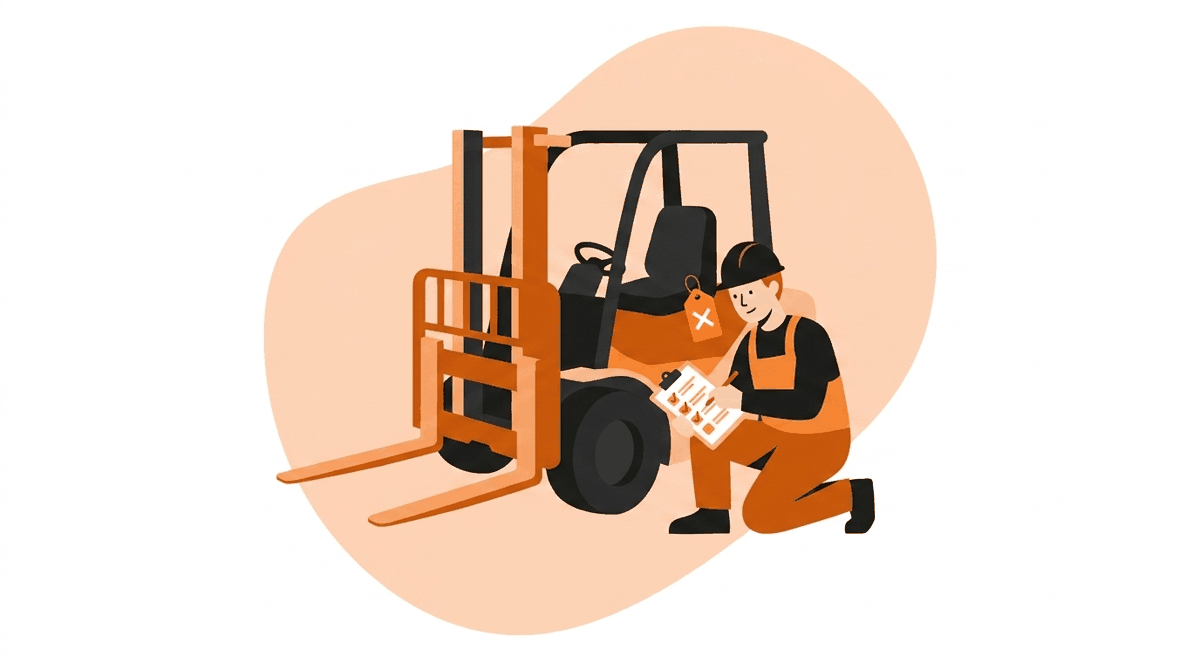
- Training and certification are mandatory. Nobody operates a forklift without completing formal instruction, practical training, and an evaluation. Operators must be re-evaluated at least every three years.
- Refresher training is required after an accident or near miss, unsafe operation, or a change in truck type or workplace conditions.
- Trucks must be inspected before each shift, and any truck in need of repair or in an unsafe condition must be taken out of service.
- Loads must be within the truck’s rated capacity and carried tilted back, forks low.
OSHA’s powered industrial trucks page collects guidance and training resources. Note that violations of 1910.178 regularly appear among the most common OSHA violations.
Forklift hazards
The situations that put people in the hospital:
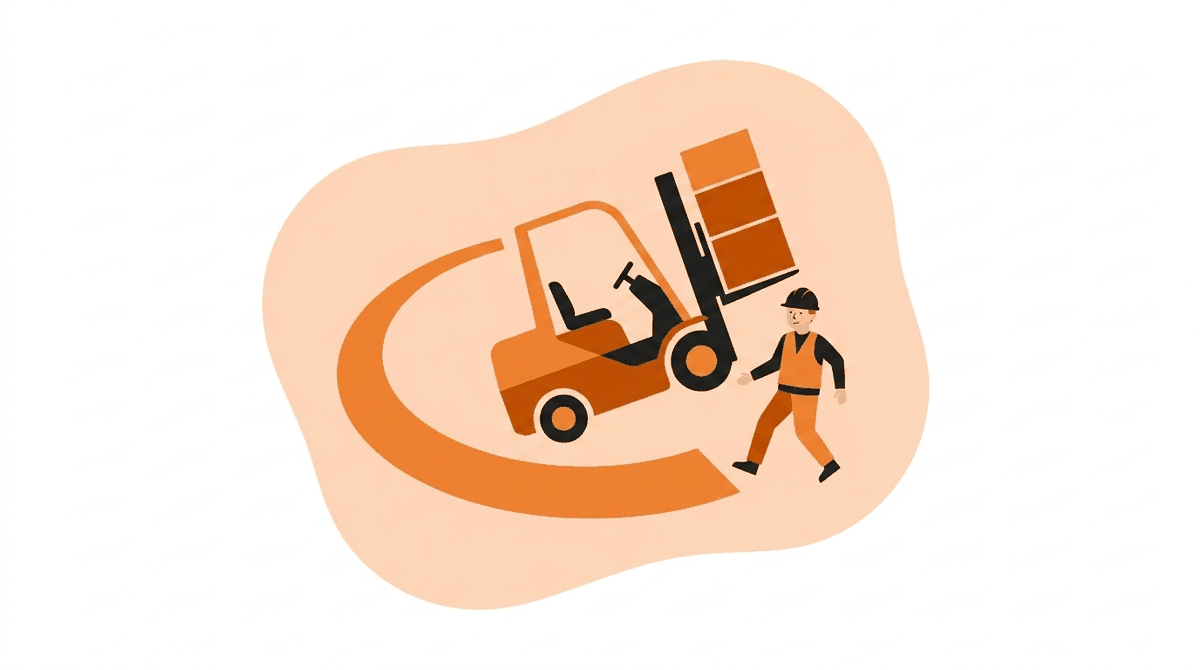
- Tip-overs. Turning too fast, driving across a slope, or lifting with the load high shifts the center of gravity outside the stability triangle. In a tip-over, jumping out is what kills — operators are crushed by the overhead guard.
- Struck pedestrians. Rear-end swing catches people standing near a turning truck. Reversing trucks catch people walking through “just this once.”
- Falling loads. Damaged pallets, unbanded stacks, and overloaded racks drop material on operators and bystanders — exactly what happened at Mitchell Industrial Tire. This is a classic line of fire hazard.
- Falls from forks. Raising a coworker on the forks or a bare pallet instead of an approved work platform.
- Docks and edges. Trailers creeping away from the dock, or trucks driving off the edge.
Forklift safety toolbox talk
This one’s for everybody — drivers and people on foot — because forklift incidents almost always involve both.
Drivers first. Your pre-shift inspection is not a formality. Brakes, horn, forks, tires, hydraulics, seatbelt. If something’s wrong, the truck gets parked and tagged, not “nursed through the shift.” When you drive: forks low, load tilted back, speed you could stop within. Sound the horn at every corner and doorway — every one, every time, even at 2 a.m. when the building feels empty. If the load blocks your view, drive in reverse or use a spotter. And wear the seatbelt. If the truck ever starts to tip, stay in the seat, brace, and lean away from the fall. Operators who jump get crushed by their own overhead guard.
Now everyone on foot. Make eye contact with the driver before you cross their path — if you don’t have eye contact, you don’t have permission. Never walk under raised forks, loaded or empty. Keep out of the rear-swing zone when a truck is turning; the back end moves faster and wider than you expect. And never, ever ride the forks.
One more thing for all of us: only trained, certified operators touch the trucks. Not “I drove one at my last job.” Not “just moving it ten feet.” OSHA found untrained drivers at the Texas warehouse where an operator died last year. Certification isn’t a card in your wallet — it’s the difference between knowing and guessing what 9,000 pounds will do. Who has questions?
Questions to employees
Ask your crew — a quick check that the talk landed:
- What do you check on a forklift before starting your shift?
- What should you do if you start to tip over in a forklift?
- Where is the rear-swing zone, and why is it dangerous to pedestrians?
- What does a pedestrian need before crossing a forklift’s path?
- When is refresher training required for operators?
- What’s the right way to handle a load that blocks your forward view?
Promote forklift safety with this email template
Hi [Name],
A few forklift reminders for your team this week:
- Pre-shift inspections are mandatory — defective trucks come out of service, no exceptions
- Only certified operators drive, and re-evaluations are due every three years
- Horns at every corner and doorway; seatbelts every trip
- Pedestrians: eye contact with the driver before crossing, and stay clear of raised forks and the rear-swing zone
BLS data shows forklifts cause over 7,000 lost-time injuries a year, and most involve a driver and a pedestrian who each assumed the other saw them. Let’s not make that assumption here.
Thanks,
[Your Name]
Conclusion
Forklifts are unforgiving because they combine mass, height, and blind spots in spaces full of people. Trained operators, daily inspections, low forks, seatbelts, and pedestrians who never assume they’ve been seen — that’s the whole formula. Follow it every trip, because a forklift never has a minor collision with a human being.


