Hearing Protection Toolbox Talk: Noise Damage Is Permanent


Hearing loss doesn’t announce itself. There’s no blood, no bruise, no incident report. You just notice — years from now — that you’re asking people to repeat themselves, turning the TV up, missing your kid’s voice from the next room. By then it’s too late, because noise-induced hearing loss is permanent. The hair cells in your inner ear don’t grow back.
That’s what makes noise different from most hazards we talk about. A cut heals. A strain recovers. Your hearing only ever goes one direction, one shift at a time.
You won’t notice losing your hearing until it’s gone — and it doesn’t come back.
Why is hearing protection safety important?
The CDC estimates that 22 million workers are exposed to potentially damaging noise at work each year. In manufacturing, hazardous noise is one of the most common exposures on the floor — grinders, presses, compressed air, saws, impact tools, material handling.
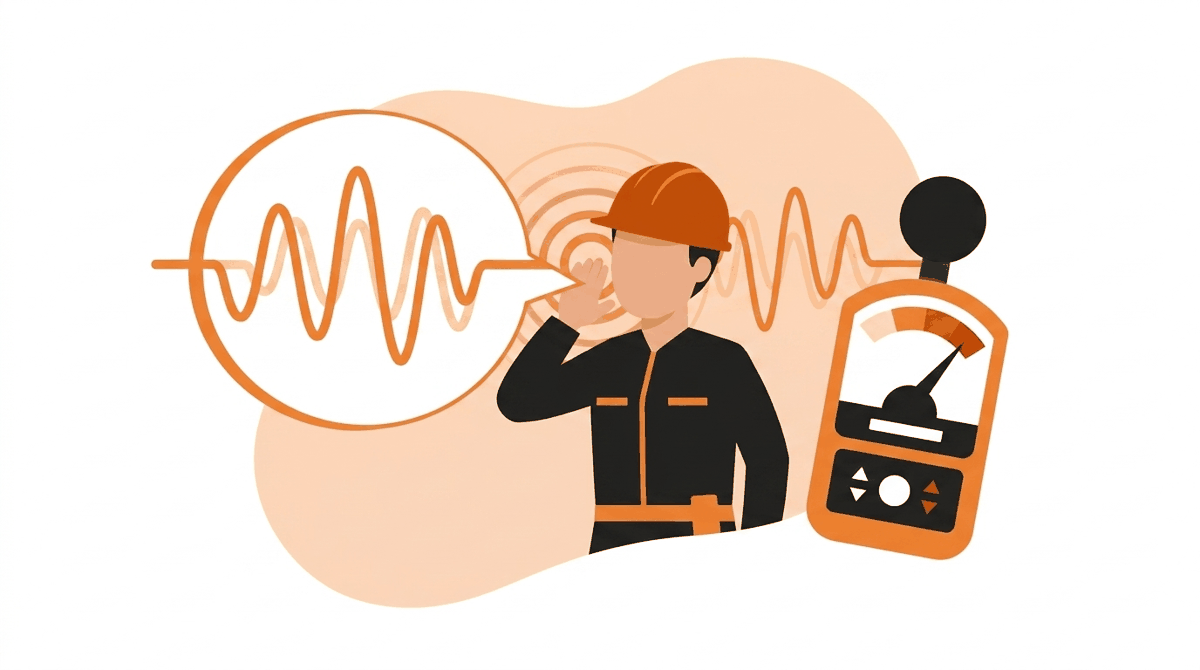
Here’s a field test OSHA suggests: if you have to raise your voice to talk to someone an arm’s length away, the noise level around you is probably above 85 decibels — the level where hearing damage starts with repeated exposure.
Noise also does damage beyond your ears. It masks warning shouts, backup alarms, and the sound of a machine about to fail. And research links chronic noise exposure to stress and ringing in the ears (tinnitus) that never switches off. October is National Protect Your Hearing Month — a good excuse to revisit this talk, along with our other October safety topics.
OSHA regulations for hearing protection
The standard is 29 CFR 1910.95 — Occupational Noise Exposure. In plain English:
- At 85 dBA averaged over an 8-hour shift (the “action level”), your employer must run a hearing conservation program: noise monitoring, annual audiometric testing (hearing tests), hearing protectors made available, and training.
- At 90 dBA averaged over 8 hours (the permissible exposure limit), exposure must be reduced — first through engineering and administrative controls, with hearing protection covering whatever remains.
- Audiometric testing matters because it catches damage early, while there’s still something left to protect. If your annual test shows a shift in your hearing, protection becomes mandatory and the program has to respond.
OSHA’s occupational noise page covers controls and program requirements in more depth.
Hearing protection hazards
Where hearing gets destroyed in real workplaces:
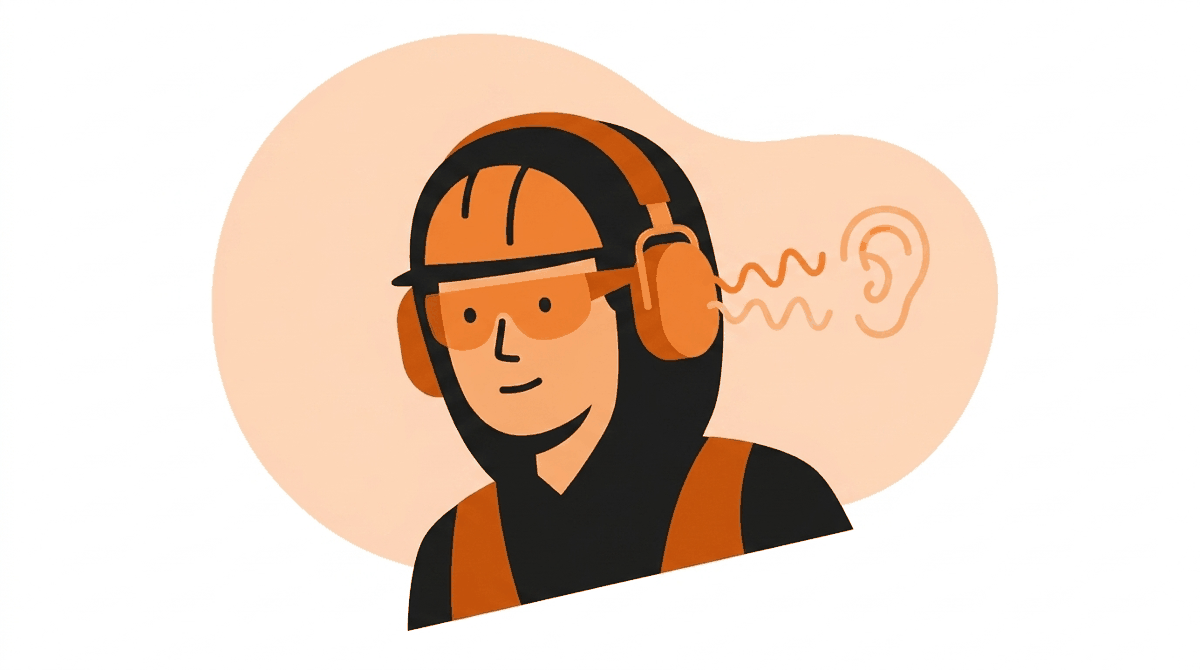
- The “short task” myth. A worker skips earplugs to cut one piece on the chop saw. Then another. Exposure adds up across a career, not a task.
- Poorly fitted earplugs. Foam plugs stuffed in halfway can lose most of their rated protection. A plug that lets you hear normal conversation isn’t sealed.
- Compressed air and grinding. Some of the loudest routine noise on a shop floor, and often done without protection because it “only takes a minute.”
- Halfway habits. Earmuffs worn over a hood or safety glasses’ temples can break the seal — just like a fogged lens defeats your safety glasses.
- Noise you’ve stopped hearing. If the shop noise doesn’t seem loud anymore, that’s not toughness — that may already be hearing loss.
Hearing protection toolbox talk
Let me start with the bad news, because it’s the whole point: the hearing you have right now is all you will ever have. Every unprotected shift in high noise trades away a little of it, and there is no surgery, no treatment, no hearing aid that gives you back what noise takes. Hearing aids help, but they’re to hearing what a cane is to walking.
Here’s the arm’s-length rule. Right now, and any time this shift, if you have to raise your voice to be understood by someone three feet away, you’re in noise that damages hearing — put your protection in. You don’t need a meter to make that call.
Now let’s talk about wearing it right, because badly worn protection is barely protection at all. Foam plugs: roll them tight between clean fingers, pull the top of your ear up and back with your other hand, insert deep, and hold for a few seconds while the foam expands. Done right, your own voice sounds hollow, like your head’s in a barrel. If you can pull the plug straight out without a slight tug, it wasn’t sealed. Earmuffs: the cushion has to seal all the way around your ear — nothing under it, not a hood, not glasses’ straps, not a pencil behind your ear.
Two more things. First, your annual hearing test — take it seriously. It’s the only way to catch damage while you can still do something about it. Don’t blow it off, and don’t try to “pass” it. Second, protection in high-noise areas isn’t optional based on how the noise feels today. The posted areas are posted because they were measured.
Twenty-two million workers a year are in damaging noise. The ones who retire still hearing their grandkids are the ones who wore protection on the boring days too. Questions?
Questions to employees
Ask your crew — a quick check that the talk landed:
- What’s the arm’s-length rule for judging noise levels?
- At what noise level does OSHA require a hearing conservation program?
- How do you insert a foam earplug correctly?
- What can break the seal on a pair of earmuffs?
- Why is your annual audiometric test important?
- Which tasks in your area are the loudest, and what do you wear for them?
Promote hearing protection safety with this email template
Hi [Name],
A reminder as annual hearing tests come up on the calendar:
- Hearing protection is required in all posted high-noise areas — including for short tasks
- Foam plugs must be rolled, inserted deep, and held until sealed; muffs need a clean seal around the ear
- If you have to raise your voice to talk at arm’s length, you’re in hazardous noise — protect first, then work
- Please make your scheduled audiometric test; it’s how we catch damage early
Noise-induced hearing loss is 100% permanent and 100% preventable. Cheap foam and good habits are all it takes.
Thanks,
[Your Name]
Conclusion
Noise is the injury you never feel happening. The 85-decibel action level, properly fitted protection, and your annual hearing test exist because hearing loss can be prevented but never repaired. Wear your protection every time, wear it correctly, and treat the arm’s-length voice test as your personal noise meter. Your future self is listening.


