Winter Driving Toolbox Talk for Work Crews


For most crews, the most dangerous thing you’ll do all winter isn’t on the jobsite. It’s the drive between the yard, the site and home — in the dark, on pavement that might be wet, might be black ice, with a truck full of tools and a schedule pushing you.
We plan lifts, we permit hot work, we inspect harnesses — and then we treat a 40-mile drive on packed snow like a commute instead of a task. The numbers say that’s backwards: vehicle crashes are the leading cause of work-related deaths in America, year after year, and winter loads the dice against every driver.
Ice doesn’t care about your schedule — drive for the road you’re on, not the clock you’re against.
Why is winter driving safety important?
Transportation incidents are the number one killer of American workers. The Bureau of Labor Statistics’ Census of Fatal Occupational Injuries counted 1,942 transportation-incident deaths in 2023 — about 37 percent of all workplace fatalities that year, more than falls, electrocutions or machinery.
Winter makes it worse. The Federal Highway Administration reports that 24 percent of weather-related vehicle crashes happen on snowy, slushy or icy pavement, killing over 1,300 people and injuring more than 116,800 every year.
Snow and ice attack the two things driving depends on: traction and vision. Stopping distances stretch to several times their dry-pavement length, and lane markings and pedestrians disappear into glare and spray. Add early darkness and crews driving home tired after a long cold shift — where fatigue joins the party — and the routine drive becomes the day’s riskiest hour.
OSHA regulations for winter driving
There is no OSHA standard for driving on snow and ice — but the duties are still real:
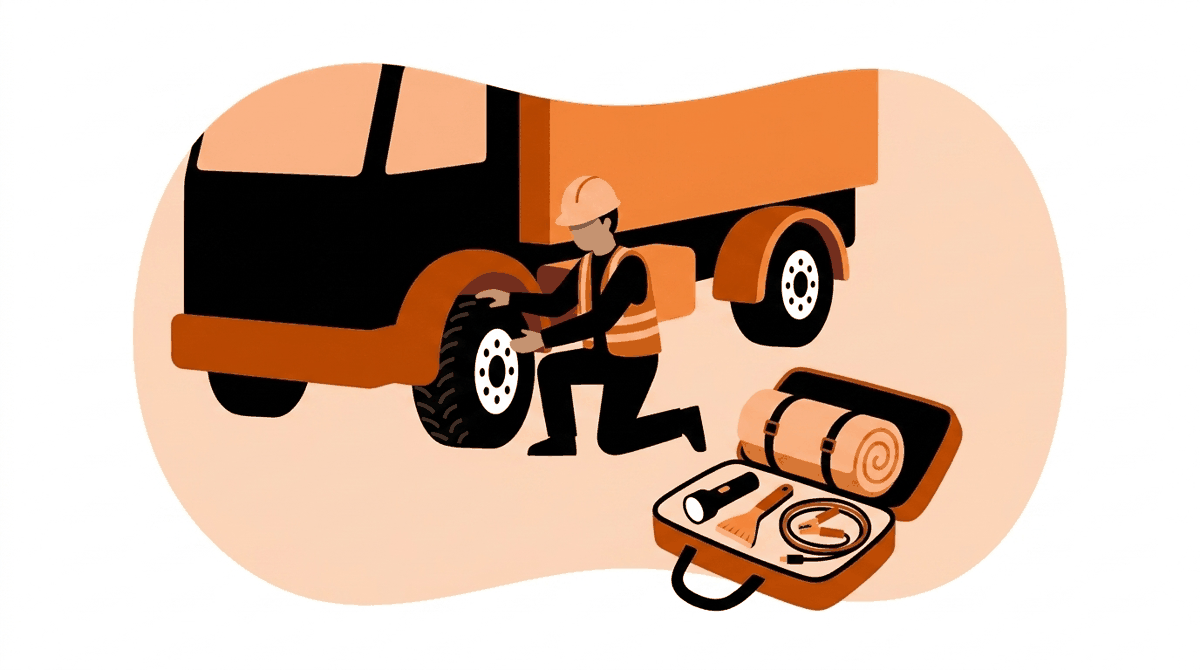
- OSHA’s winter weather guidance identifies winter driving as a key seasonal hazard: vehicles properly maintained, drivers trained, trips planned around conditions.
- The General Duty Clause, Section 5(a)(1) obliges employers to address recognized hazards — including unsafe vehicles and conditions that reasonably should shut driving down.
- OSHA’s motor vehicle safety guidance reinforces the basics that matter double in winter: seat belts on every trip, no impaired or distracted driving, and journey management.
- NHTSA’s winter driving guidance covers the vehicle side: tires, battery, lights, wipers and washer fluid, and an emergency kit aboard.
For CDL drivers, FMCSA rules add hours-of-service limits and a requirement to use extreme caution — or stop — in hazardous conditions.
Winter driving hazards
The situations that put work vehicles in ditches — or worse:
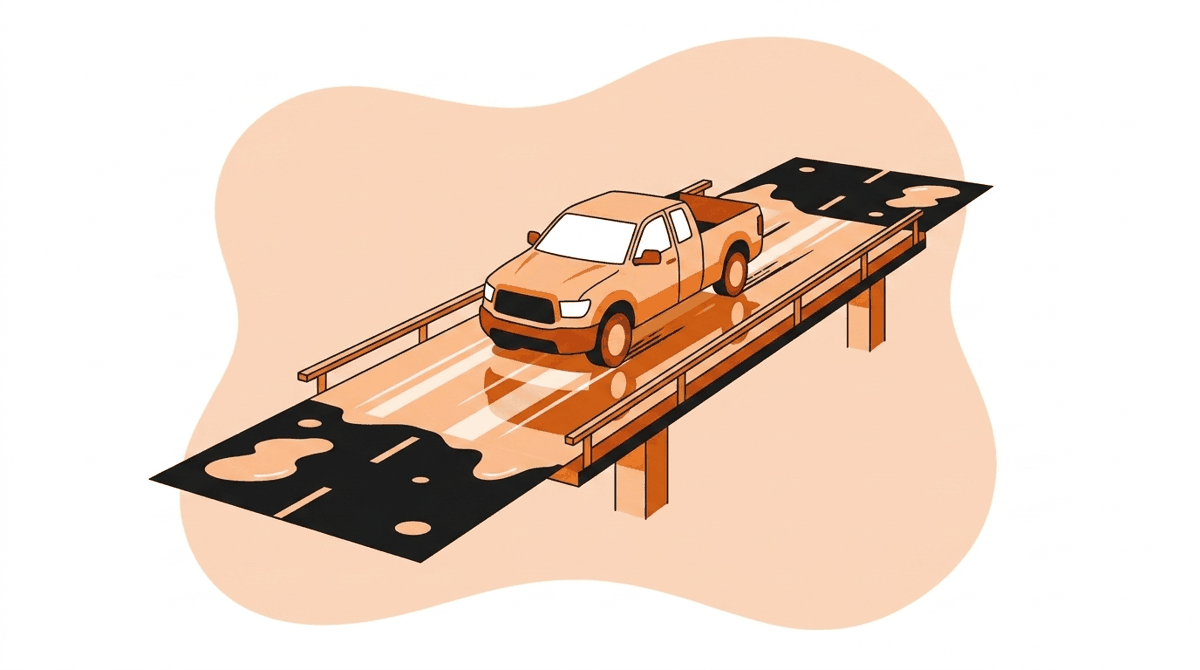
- The crew truck leaves the yard at 5:45 a.m. after a refreeze. The road “looks wet.” It’s black ice, and the first hint is the steering going light on the overpass.
- A driver follows a plow truck too closely, loses visibility in the snow cloud, and has nowhere to go when the plow brakes.
- A pickup towing a loaded equipment trailer takes a downhill curve at its usual speed; the trailer swings first.
- A loose 20-pound toolbox in the cab becomes a missile in a 40-mph stop.
- Bridge decks and shaded curves freeze while the rest of the route stays merely wet — the road changes surface four times in ten miles.
- A worker heads home at dusk after ten hours in the cold: tired, dehydrated, heater blasting, eyelids heavy. Drowsy driving impairs like drunk driving does.
Winter driving toolbox talk
Before anyone turns a key this winter, I want three habits locked in: prep the vehicle, plan the trip, and drive with margins.
Prep: winter is a daily walk-around season. Tires first — tread and pressure, because pressure drops as the temperature does. Then lights, wipers, washer fluid, and every window, mirror and light cleared completely — not a porthole scraped in the windshield. Secure everything in the cab and the bed, because in a hard stop, loose cargo keeps doing forty even after you don’t. And keep the winter kit aboard: blanket, flashlight, scraper, jumper cables, phone charger, water, and something to eat.
Plan: check conditions before you go, not through the windshield. Expect ice on bridges, overpasses and shaded stretches even when the highway is just wet. Tell someone your route and ETA on bad days. And build in time — most winter crashes are ordinary drives at ordinary speeds on a surface that stopped being ordinary.
Drive: on snow and ice, everything happens slower or it happens wrong. Cut your speed well below the limit — the posted number assumes dry pavement. Triple your following distance or more; you cannot buy back stopping distance after you need it. Smooth inputs only: gentle throttle, gentle brakes, gentle steering. If you start to skid, ease off everything and steer where you want to go. No cruise control on slick roads.
And the one that takes the most guts: know when not to drive. If conditions are beyond the vehicle or beyond you — whiteout, glare ice, or you’re too beat to be safe — pull over and call. I will always take that call better than the other one.
Questions to employees
Ask your crew — a quick check that the talk landed:
- What’s the leading cause of work-related deaths in the U.S.?
- Where does ice form first on a route when the rest of the road is just wet?
- How should your following distance change on packed snow?
- What’s in the winter emergency kit in your vehicle — and is it actually in there right now?
- What should you do if conditions get worse than you or the vehicle can handle mid-route?
- Why is loose cargo in the cab a winter driving hazard?
Promote winter driving safety with this email template
Hi [Name],
Winter conditions are back, and driving is statistically the most dangerous thing we do for work. Before every trip:
- Do a walk-around: tire tread and pressure, lights, wipers, washer fluid, and fully cleared glass — every window, not a peephole.
- Secure all tools and cargo, in the bed and in the cab.
- Slow down and triple your following distance on snow or ice. No cruise control on slick roads.
- If conditions get beyond safe — or you’re too tired to drive safely — pull over and call me. That call will never be held against you.
Check that your vehicle’s winter kit is stocked: blanket, flashlight, scraper, jumpers, charger, water and snacks.
Drive safe,
[Your Name]
Conclusion
More workers die driving than doing anything else on the job, and winter stacks the odds further. Treat every winter drive like a work task: inspect the vehicle, clear the glass, secure the load, plan the route, then drive slow, smooth and long on following distance. And when the road wins the argument, park. The schedule can absorb a late arrival; your family can’t absorb the alternative.

