Cold Stress Toolbox Talk: Hypothermia, Frostbite and Working Through Winter


Cold doesn’t feel like a hazard. It feels like discomfort — something you push through, prove yourself against, complain about at lunch. That attitude is exactly what makes cold stress dangerous, because by the time cold stops feeling like discomfort and starts feeling like nothing at all, you’re already in trouble.
Cold stress covers a family of conditions: hypothermia, when your core temperature drops below what your organs need; frostbite, when tissue actually freezes; and trench foot, when feet stay cold and wet long enough for tissue to break down — no freezing required. And here’s what surprises people: you don’t need arctic conditions. Add wind and wet clothes, and serious cold stress happens well above freezing.
The most dangerous thing about cold is that it numbs the part of you that would notice.
Why is cold stress safety important?
Cold injuries are a steady, documented drain on outdoor crews. The Bureau of Labor Statistics counted 190 nonfatal work injuries from exposure to environmental cold in 2020 serious enough to cause days away from work — and in a typical year, workers die of cold exposure on the job.
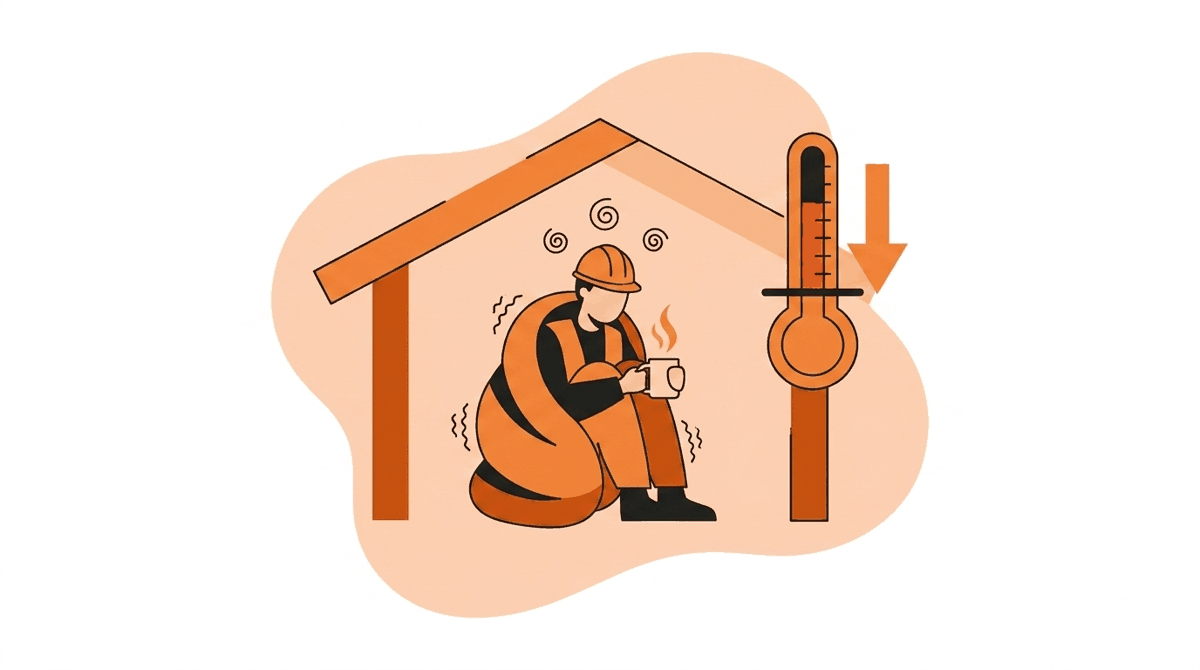
The physiology is what makes cold uniquely sneaky. NIOSH explains that hypothermia sets in when body temperature falls below about 95°F — and one of its early symptoms is confusion. The condition attacks your judgment first: victims stop shivering, feel strangely fine, and make bad decisions right when they most need good ones. Frostbite numbs the very fingers and toes it’s destroying, so the warning system fails exactly where the damage happens.
Wind multiplies everything — air at 30°F with a stiff wind strips heat like far colder air — and wet clothing is worse still, because water conducts heat away from your body far faster than air.
Cold is a seasonal hazard, which means it’s a planning hazard. Our December and January safety topics pages help you build it into your winter meeting schedule.
OSHA regulations for cold stress
There is no specific OSHA standard for cold stress or a minimum working temperature. The obligations come from elsewhere:
- The General Duty Clause, Section 5(a)(1) requires employers to protect workers from recognized serious hazards — and cold stress is one.
- OSHA’s cold stress guidance calls for training workers to recognize symptoms, providing warm break areas, scheduling heavy outdoor work for the warmer parts of the day, and using the buddy system.
- NIOSH’s cold stress recommendations add specifics: monitor workers’ physical condition, allow for acclimatization, provide warm liquids, and adjust work/rest cycles as wind chill drops.
- PPE rules still apply: required protective clothing falls under 29 CFR 1910.132.
Cold stress hazards
How cold injuries actually happen on real jobs:
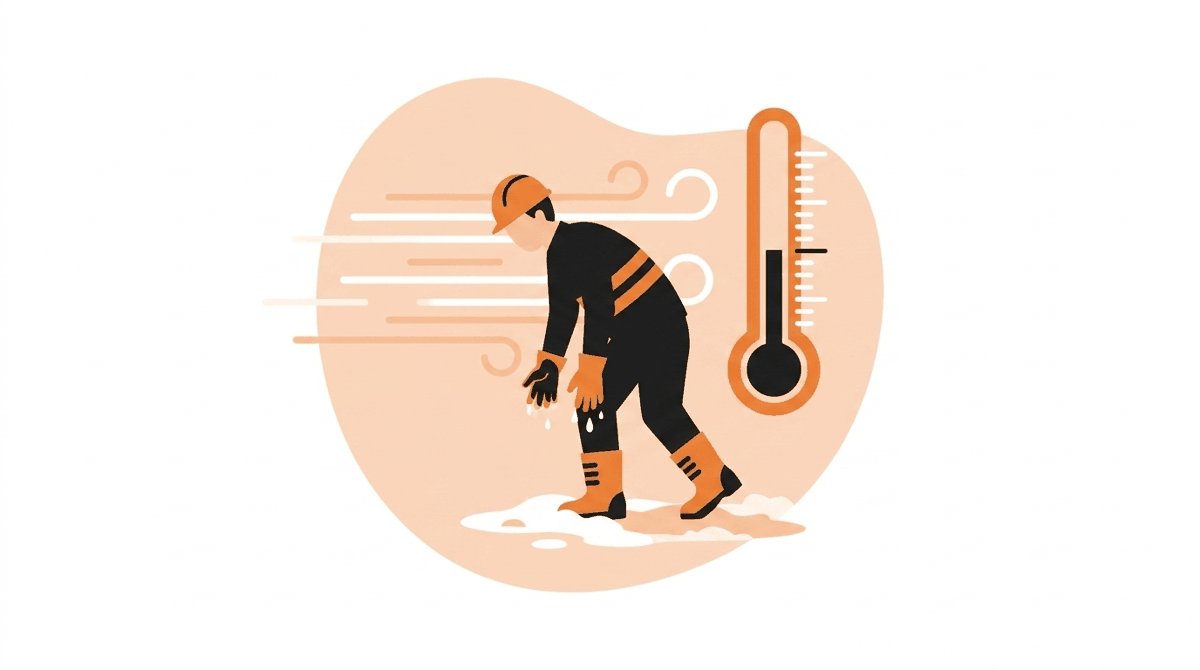
- A crew works a windy deck at 35°F. Nobody’s worried — it’s above freezing — but wind chill strips heat for six straight hours.
- A laborer sweats through his base layer digging in the morning, then stands still on grade work all afternoon in wet clothes.
- A worker’s boots leak. His feet are cold and wet from 7 a.m. on; by week’s end he has the early tissue damage of trench foot — no freezing temperatures involved.
- An older worker on blood pressure medication crashes faster than the younger crew around him — age, medications and conditions like diabetes all raise the risk.
- A gloveless minute handling steel fasteners at 10°F turns into frostnip; bare skin can freeze to cold metal.
- The “warm-up” is five minutes in a running truck with wet gloves still on.
Cold stress toolbox talk
It’s going to be cold out there, so let’s talk about how to work in it without it working on you.
First, dress like you know what you’re doing: layers, not bulk. A wicking base layer — not cotton, cotton holds sweat against your skin — an insulating middle layer, and a wind- and water-resistant shell. Shed a layer when you’re working hard and add it back when you slow down, because sweat is winter’s trap: soak your clothes by ten and you’ll freeze in them by noon. And protect the extremities — insulated gloves and boots, dry spares, a hat or liner.
Second, know the warning signs, in yourself and your buddy. Early hypothermia looks like heavy shivering, clumsiness, and grumbling confusion. Late hypothermia is the scary one: the shivering stops, speech slurs, and the person insists they’re fine. If someone stops shivering in serious cold, that is an emergency — get them somewhere warm, get wet clothes off them, and get help. Frostbite shows up as numb, waxy, white or grayish patches on fingers, toes, cheeks, ears and nose. Don’t rub frozen skin — warm it gently and get it looked at.
Third, use the system: take your warm-up breaks — they’re part of the job, not a weakness — drink warm fluids, and watch the wind, because a dropping wind chill changes the math even when the thermometer doesn’t move. And watch your partner. Cold takes your judgment first, so the person best positioned to notice you’re in trouble is standing next to you.
Cold is beatable with preparation. It’s only dangerous when we pretend it isn’t there.
Questions to employees
Ask your crew — a quick check that the talk landed:
- What are the early signs of hypothermia — and what does it mean when a cold worker stops shivering?
- Why is cotton a bad base layer for winter work?
- What does wind chill do that the air temperature alone doesn’t tell you?
- Where is our warm break area, and how often should you be using it today?
- What are the first signs of frostbite, and what should you not do to frozen skin?
- Who is your buddy today, and what are you watching each other for?
Promote cold stress safety with this email template
Hi [Name],
Cold weather is here, so a few reminders before this week’s outdoor work:
- Dress in layers with a wicking base layer (no cotton against the skin), and bring spare dry gloves and socks.
- Use the warm break area on schedule — warm-up breaks are part of the workday.
- Watch yourself and your buddy for shivering, clumsiness and confusion. A worker who stops shivering in the cold needs help immediately.
- Report leaking boots, wet gear or any numb, white patches of skin right away.
We’ll adjust schedules on high wind-chill days. If conditions feel unsafe, say so.
Stay warm,
[Your Name]
Conclusion
Cold stress disables its own alarm: it numbs the skin it’s freezing and clouds the judgment that would call for help. The defenses are proven — layer smart, stay dry, take the warm breaks, respect wind chill, and watch your buddy like the cold is watching him. Toughness doesn’t warm anyone up. Preparation does.

