Fatigue and Complacency Toolbox Talk: The Silent Hazards


The most dangerous person on a jobsite isn’t the new hire who doesn’t know the hazards. It’s the twenty-year veteran running on five hours of sleep, doing a task he’s done ten thousand times. He knows every hazard — he just isn’t seeing them anymore.
Fatigue and complacency are a matched pair. Fatigue drains the mental energy you need to stay alert; complacency convinces you that alertness isn’t necessary anyway. Neither shows up on a hazard assessment, neither triggers an alarm, and both stand behind a huge share of the incidents written up as “worker error.” This talk is about noticing the two hazards that live inside your own head.
Familiarity doesn’t make the hazard smaller — it just makes it harder to see.
Why is fatigue and complacency safety important?
The science on fatigue is blunt. NIOSH training materials show that being awake for 17 hours produces impairment similar to a blood alcohol concentration of 0.05% — and 24 hours awake is similar to 0.10%. That’s legally drunk. Nobody would let a coworker run a saw after a six-pack, but we barely blink at one running it after a night shift and a two-hour commute.
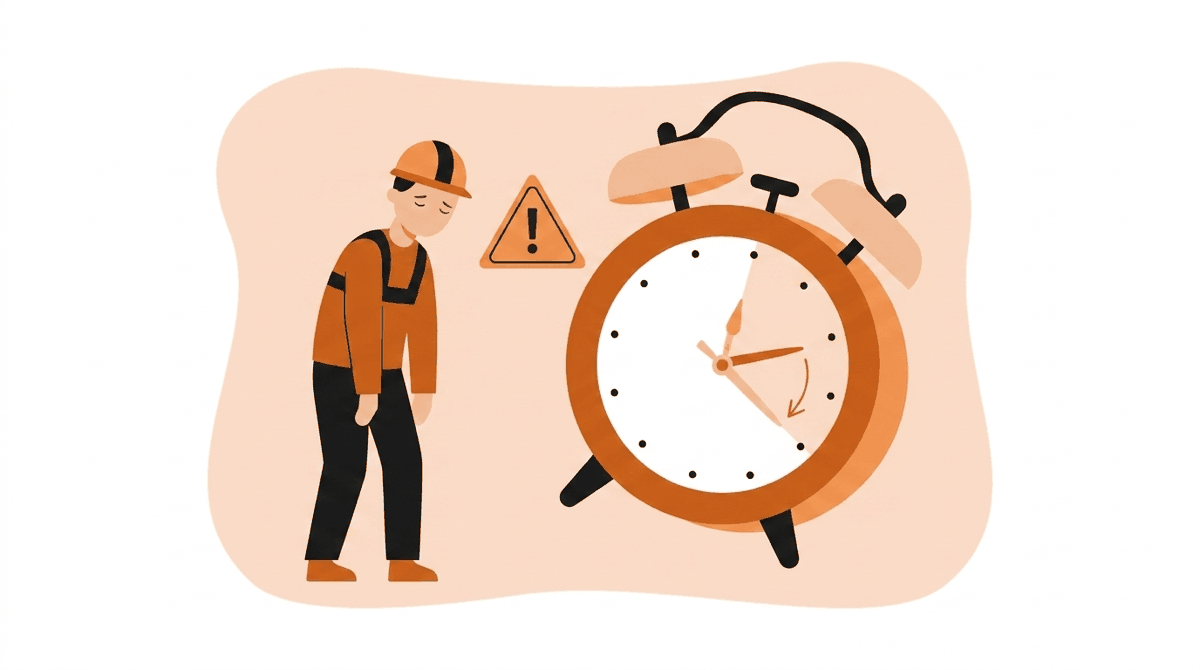
Fatigue slows reaction time, narrows attention, weakens memory and — most dangerously — impairs your ability to judge how impaired you are. NIOSH links long hours and irregular shifts to higher injury rates.
Complacency needs no lab study — every experienced hand has felt it. It’s the autopilot that develops when a task stops feeling risky because it hasn’t hurt you yet. And it’s the engine behind taking shortcuts in safety: the shortcut only feels safe because you’ve gotten away with it before. Getting away with it is not the same as being safe.
OSHA regulations for fatigue and complacency
There is no specific OSHA standard capping work hours or regulating fatigue for general industry and construction. But that doesn’t make it a legal gray zone:
- The General Duty Clause, Section 5(a)(1) requires employers to keep the workplace free of recognized serious hazards — and OSHA explicitly treats worker fatigue from long shifts and extended workweeks as a recognized contributor to injuries.
- OSHA’s worker fatigue guidance recommends schedules that allow real rest, workload rotation on monotonous tasks, and training workers to recognize fatigue symptoms in themselves and others.
- Complacency is addressed indirectly but powerfully: every “inspect before each use” line in a standard exists because regulators know routine breeds blindness. Pre-shift checks are anti-complacency devices.
Fatigue and complacency hazards
What these hazards look like in the wild:
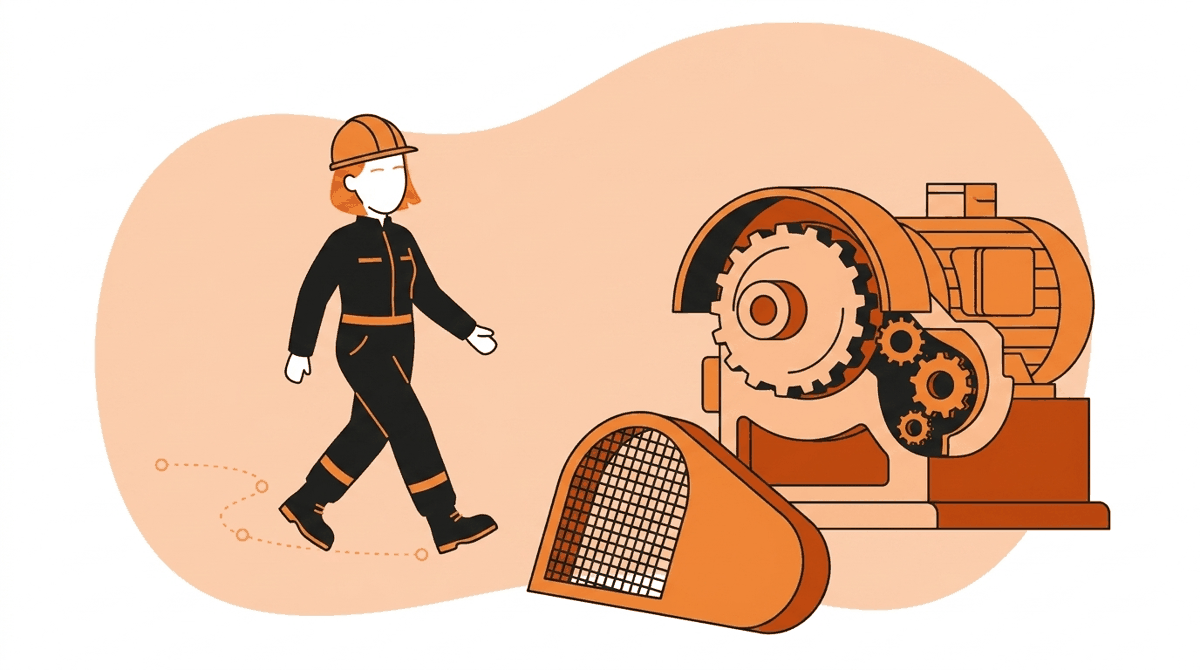
- An operator on his sixth twelve-hour day in a row misjudges a swing radius he’s judged correctly five hundred times before.
- A worker microsleeps for two seconds on the highway home. At 65 mph, that’s 190 feet driven blind.
- The crew has done this exact demolition sequence all week, so today nobody walks the area first — and nobody notices the changed condition behind the wall.
- A technician skips the lockout verification step because “this machine’s never been energized when it shouldn’t be.” The one habit that would have caught the exception is gone.
- A veteran waves off the new hire’s question about a missing guard: “It’s been like that for years.” That’s complacency spreading to the next generation.
Fatigue and complacency toolbox talk
I want to talk about the two hazards nobody tags out: being tired, and being on autopilot.
First, fatigue. Being awake seventeen hours straight impairs you about like a 0.05 blood alcohol level — a full day awake is like being legally drunk. You can show up sober and still be impaired. So I’m asking two things. Be honest with yourself about how you slept and factor it into your day — double-check your work, slow your driving, skip the “quick” improvisations. And be honest with me: if you’re wrecked, tell me. I’d rather resequence the day than have you run equipment impaired. Watch each other, too. If your partner is yawning, drifting, or telling the same story twice, that’s real information — speak up like you would about any other hazard.
Now complacency, the veteran’s disease. The tasks most likely to hurt you aren’t the scary ones — you respect those. It’s the ones you’ve done so often your brain stops attending. The counter: make the familiar unfamiliar on purpose. Before a routine task, take ten seconds and ask, “what’s different today?” Different weather, different helper, different material, different pressure. Something is always different. Do your pre-use inspections like they matter, because the day they matter, you won’t know in advance.
And the two hazards multiply each other: a tired brain reaches for autopilot, and autopilot hides the mistakes fatigue is making. That combination is behind more “experienced worker, routine task” injuries than anything else.
If something feels off — with the job or with yourself — stop and reset. That’s what stop work authority is for. Complacency says “it’ll be fine.” Make it prove it.
Questions to employees
Ask your crew — a quick check that the talk landed:
- How many hours awake produces impairment similar to a 0.05% blood alcohol level?
- What signs of fatigue can you spot in yourself? In a coworker?
- Which task on this site are you most on autopilot for — and what’s changed about it recently?
- Why does “we’ve always done it that way and nobody got hurt” prove nothing about safety?
- What should you do if you’re too fatigued to work safely — and who do you tell?
- When did a pre-use inspection last catch something for you?
Promote fatigue and complacency safety with this email template
Hi [Name],
Two hazards I want on everyone’s radar this week: fatigue and complacency.
- If you show up seriously short on sleep, tell your supervisor so we can adjust assignments. Being awake 17+ hours impairs you like alcohol does.
- Look out for fatigue in your crewmates, especially on repetitive work and long drives.
- On routine tasks, take ten seconds and ask “what’s different today?” Do your pre-use checks for real, not from memory.
Most incidents don’t happen to people who didn’t know better — they happen to people who stopped looking. Stay sharp.
Thanks,
[Your Name]
Conclusion
Fatigue and complacency are the hazards you carry through the gate in your own head — one drains your attention, the other convinces you attention isn’t needed. The defenses are honesty and habit: admit when you’re running on empty, watch your crewmates, ask “what’s different today?” before every routine task, and do the inspections as if the exception is coming — because eventually it is. Experience is only protection if your eyes are still open.
References and Further Reading
- NIOSH — Impairments from sleep deprivation compared to alcohol intoxication
- OSHA — Long work hours, extended shifts, and worker fatigue
- NIOSH Science Bulletin — Work-related fatigue reaches beyond the workplace
- Taking shortcuts in safety — our most-read talk, and complacency’s favorite outcome
- Stop work authority toolbox talk


