Power Tool Safety Toolbox Talk: Respect the Tool, Keep Your Fingers


A power tool is a small machine you hold in your hands — spinning blades, grinding wheels, and drill bits inches from your fingers, running at thousands of RPM. Familiarity is the trap. The grinder you’ve used a thousand times feels like an extension of your arm, right up until the wheel shatters or the blade binds and kicks.
Most power tool injuries come down to a short list of causes: guards removed or wedged back, damaged cords, the wrong tool or wrong accessory for the job, and hands or bodies in the line of the cut.
The tool doesn’t know the difference between wood, steel, and your hand.
Why is power tool safety important?
Power tools concentrate a lot of energy in a small package. According to the Bureau of Labor Statistics, tools, instruments, and equipment — including powered and unpowered hand tools — were involved in 7 percent of work-related amputations in 2018, on top of the thousands of lacerations, eye injuries, and shocks that never make the amputation statistics.
The injuries follow the energy. Saws and grinders cause cuts and kickback injuries. Abrasive wheels shatter and throw fragments. Drills catch and twist wrists. Damaged cords and wet conditions cause shocks. Almost every one of these traces back to a skipped inspection, a missing guard, or a shortcut — the same root causes we covered in our talk on taking shortcuts in safety.
And remember: a power tool inspection starts with the same discipline as a hand tool inspection — look at it before you trust it.
OSHA regulations for power tool safety
The key standards:
- 29 CFR 1910.242 — Hand and Portable Powered Tools, General: employers must keep all tools in safe condition, whether company-owned or employee-owned. It also limits compressed air for cleaning to below 30 psi (and never for cleaning yourself off).
- 29 CFR 1910.243 — Guarding of Portable Powered Tools: guards on circular saws, grinders, and other portable tools must be in place and working.
- 29 CFR 1926 Subpart I — Tools (Hand and Power): the construction-side requirements, including guarding and electrical protection.
OSHA also publishes a plain-language booklet, Hand and Power Tools (OSHA 3080), that’s worth keeping in the break room.
Power tool hazards
The classics, seen on every jobsite and shop floor:
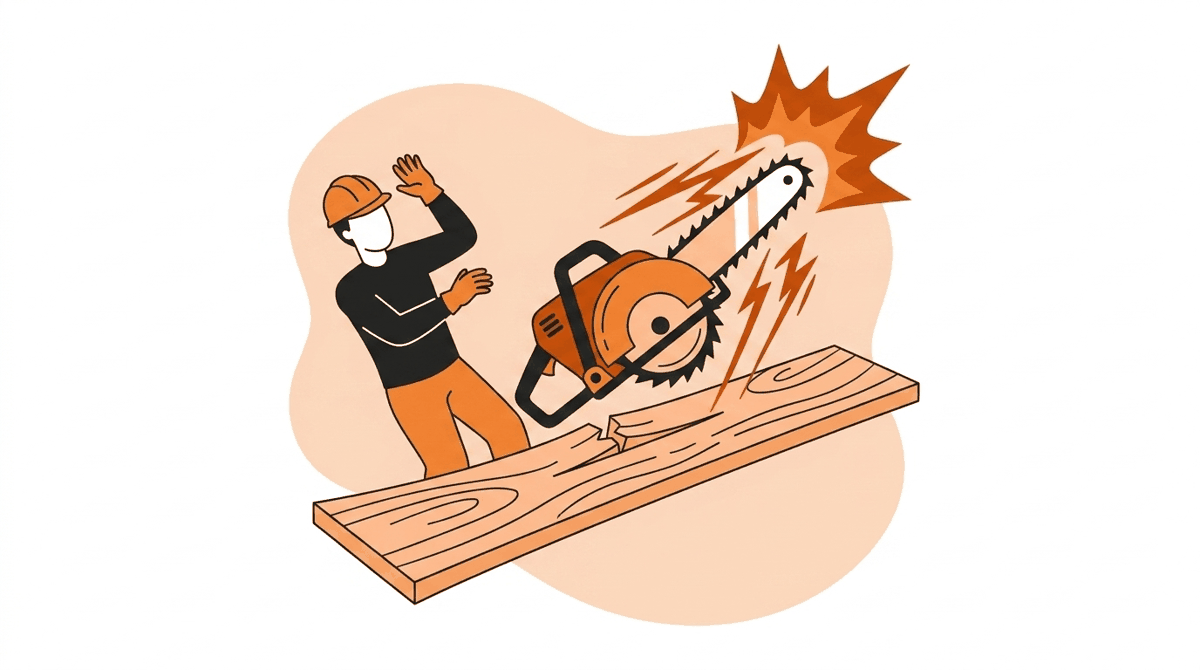
- Kickback. A circular saw blade binds mid-cut and the saw jumps back at the operator. Usually caused by unsupported material pinching the blade.
- Missing or wedged guards. A retracting saw guard tied back “just for this rip cut.” A grinder run without its wheel guard because it fits into tight spots better.
- Wrong accessory. A cut-off wheel used for grinding, a wheel rated below the grinder’s RPM, a dull blade forcing the operator to push harder.
- Damaged cords and no GFCI. Taped-over cuts in cords, missing ground pins, tools used in damp areas without ground-fault protection.
- Loose clothing, gloves, and hair near rotating bits and spindles.
- Carrying tools by the cord or with a finger on the trigger — a stumble becomes a start-up.
Power tool safety toolbox talk
Today’s talk is about the sixty seconds before you pull the trigger — because that’s where most tool injuries are prevented.
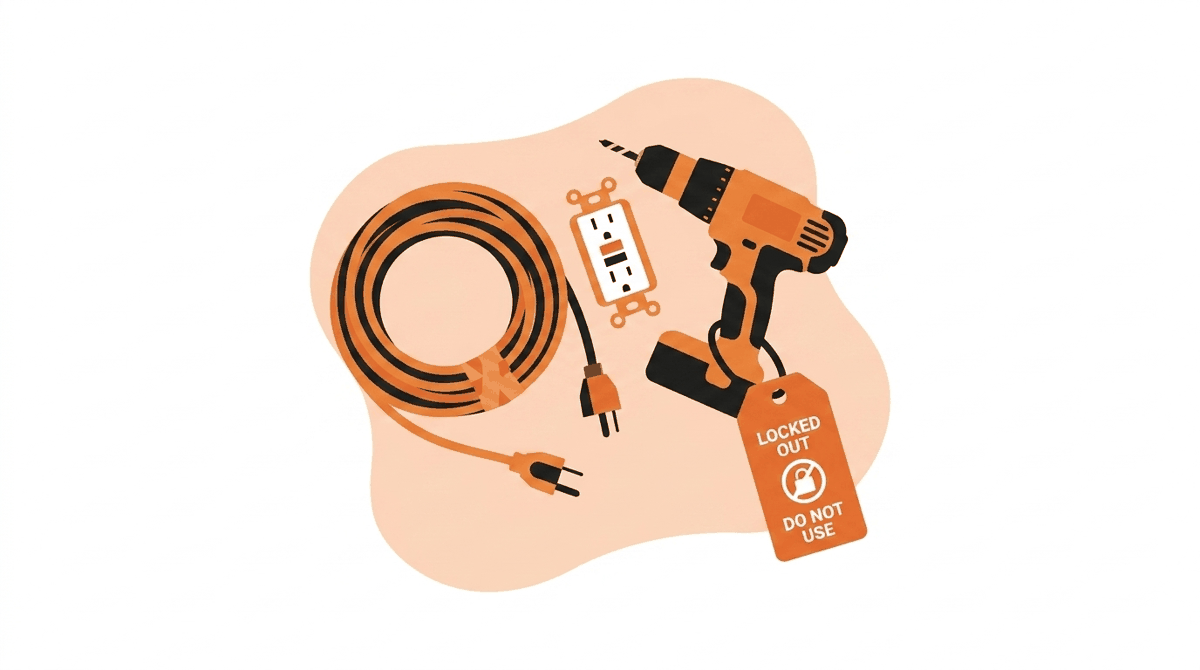
Before you use any power tool, give it a once-over. Cord: no cuts, no tape repairs, ground pin present. Housing: no cracks. Guard: in place, moving freely, snapping back on its own. Blade or wheel: sharp, undamaged, rated for the tool, mounted tight. A dull blade makes you push, and pushing causes binding and kickback. If a tool fails any of that, it doesn’t get used and it doesn’t go back on the shelf for the next guy — tag it out and turn it in.
Guards stay on. I know the guard is the least convenient part of every tool. It’s also the only part designed to take a hit for you. If a guard is slowing you down, come talk to me about the right tool or setup for the job — don’t wedge it, tie it, or take it off.
While you’re cutting or grinding: both hands on tools designed for two hands. Keep your body out of the line of the cut, so kickback swings past you, not into you. Clamp the work — a workpiece held with your knee is an injury setup. Let the tool stop completely before you set it down; a coasting blade walks.
Power management: unplug or pull the battery before changing blades, bits, or wheels. Every time. And in damp conditions, you use a GFCI — no exceptions, because water and 120 volts settle their disagreements through you.
Eyes and ears: cutting and grinding throw fragments, so safety glasses minimum, face shield for grinding, and hearing protection — most of these tools run well above safe noise levels. Questions?
Questions to employees
Ask your crew — a quick check that the talk landed:
- What do you check on a power tool before using it?
- What causes kickback, and how do you position your body to avoid it?
- When is it acceptable to remove or tie back a guard?
- What do you do before changing a blade, bit, or wheel?
- Where on this site do we need GFCI protection for tools?
- What should happen to a tool with a damaged cord?
Promote power tool safety with this email template
Hi [Name],
Ahead of this week’s work, a few power tool reminders for the crew:
- Inspect before use: cords, guards, housings, and blades — damaged tools get tagged out, not shared
- Guards stay in place and working; if a guard doesn’t fit the task, the tool is wrong for the task
- Unplug or remove the battery before changing any accessory
- Use GFCI protection in damp locations, and keep eye and hearing protection on for all cutting and grinding
Most tool injuries trace back to a skipped 60-second inspection. Let’s make that minute a habit.
Thanks,
[Your Name]
Conclusion
Power tools reward respect and punish complacency. Inspect every tool before you trust it, keep every guard where the manufacturer put it, kill the power before touching the business end, and stay out of the line of the cut. The sixty seconds you spend checking a tool is the cheapest insurance on the jobsite.


