Back Safety and Safe Lifting Toolbox Talk


Nobody ever put a back injury on the incident board with a dramatic story. No explosion, no fall, no blood — just a guy bent over a compressor fitting who stands up and can’t straighten. And unlike a cut, a back injury follows you home, into your sleep, and sometimes into every job you ever work again.
The hazard isn’t a machine or a chemical. It’s the routine lift you’ve done a thousand times, done slightly wrong, accumulating damage one load at a time. Discs don’t usually fail on the heaviest lift of your life — they fail on an ordinary one after years of bad ones. So the fix isn’t heroics. It’s technique, planning, and the humility to get help.
Your back keeps score of every bad lift — lift like you plan to work at fifty.
Why is back safety important?
The Bureau of Labor Statistics reports that back injuries accounted for 38.5 percent of all work-related musculoskeletal disorders in 2016 — 134,550 cases involving days away from work in a single year. Sprains and strains consistently rank among the most common lost-time injuries in every industry BLS tracks.
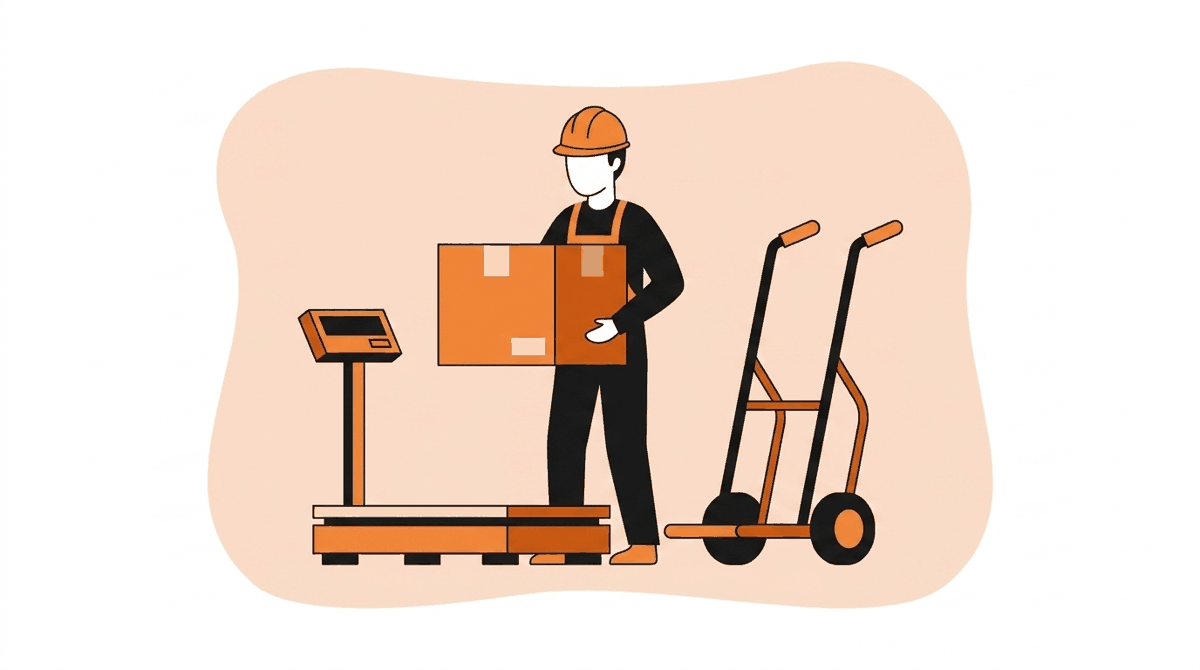
For a benchmark, NIOSH’s Revised Lifting Equation sets 51 pounds as the recommended weight limit under ideal conditions — load close to the body, at waist height, no twisting. Move that load away from your body, down to the floor, or add a twist, and the safe limit drops fast. And back injuries feed a vicious cycle: a sore back makes you take shortcuts, and shortcuts cause the next injury.
OSHA regulations for lifting and back safety
Here’s something that surprises people: OSHA has no specific standard setting a maximum weight a worker may lift. Instead:
- The General Duty Clause, Section 5(a)(1) requires employers to provide a workplace free from recognized serious hazards — and OSHA has cited employers under it for heavy, repetitive manual lifting.
- OSHA’s ergonomics guidance identifies manual material handling as a leading cause of musculoskeletal disorders and points employers toward engineering controls first: carts, dollies, hoists and lift tables.
- NIOSH’s lifting guidance is the technical benchmark for evaluating lifting tasks, built around the 51-pound recommended limit and the factors that reduce it.
Translation: the law doesn’t hand you a magic number, so the site has to think — mechanize what can be mechanized, team-lift what can’t, and train everyone on what a good lift looks like.
Back injury hazards
Where backs actually get hurt:
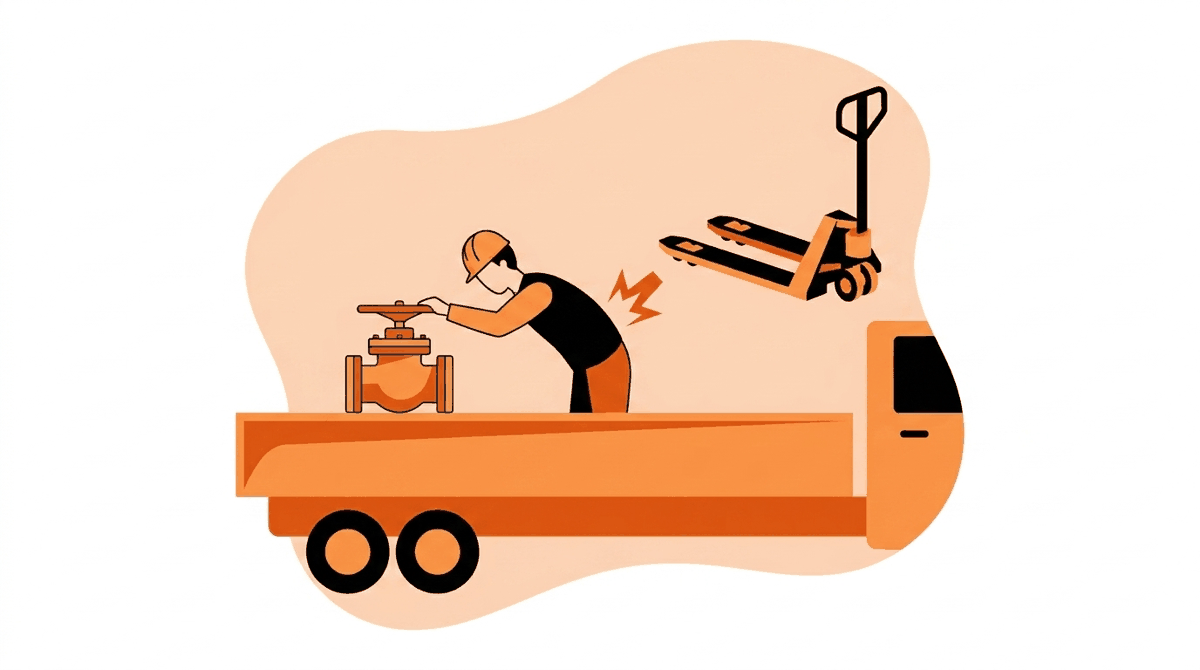
- A worker lifts a 60-pound valve out of a truck bed — load at arm’s length, back rounded, torso twisting to set it down. Three risk multipliers in one move.
- Cases get restacked by hand all afternoon. No single lift is heavy; the two-hundredth one is the injury.
- A drum “walks” during a two-man carry because nobody agreed who lifts when, and one guy catches the whole load.
- Material is staged on the floor instead of at waist height, adding a deep bend to every pick.
- A worker carries a load he can’t see over, missteps off a curb, and wrenches his back saving the fall — carrying blends straight into a slip and trip hazard.
- The pallet jack is fifty yards away, so it becomes a manual job. The walk would have cost two minutes.
Back safety and lifting toolbox talk
Let’s talk about the lift you’re going to do today without thinking about it.
Before your hands touch the load, do three things. Size it up — how heavy, how awkward, can you see over it? Check your path — clear of cords, mud and clutter, with a place to set it down. And make a call: one-person lift, two-person lift, or a machine’s job? That decision is the whole ballgame. The cart, the dolly and the forklift exist so your spine doesn’t have to be the equipment. Using them isn’t slow and isn’t soft — it’s what professionals do.
Now the technique. Get the load close — hug it. Feet shoulder-width, one slightly ahead. Bend at the knees and hips, not the waist, and keep your back in its natural curve. Grip solid, then drive up smoothly with your legs. No jerking, no snatching.
The one that gets everybody: never twist under load. Turn your feet, move your whole body. Lift-twist-lower wrecks more backs than heavy weights do.
Two-person lifts need a captain. One person calls “lift on three” and “down on three,” and you both commit. Half of all team-lift injuries come from two people lifting at two different times.
And know your limits without ego. NIOSH puts the recommended limit at 51 pounds in ideal conditions — and jobsite conditions are almost never ideal. If it’s awkward, overhead, below your knees, or heavier than it looked, stop and get help. Nobody remembers who carried the compressor alone. Everybody remembers who’s out for three months.
Your back has to last your whole career. Treat every lift like it counts, because it does.
Questions to employees
Ask your crew — a quick check that the talk landed:
- What three things should you check before touching a load?
- What is the NIOSH recommended weight limit under ideal conditions — and what makes that limit drop?
- Why is twisting while lifting so dangerous, and what do you do instead?
- What lifting aids do we have on this site, and where are they right now?
- How should a two-person lift be coordinated?
- What tasks here stage material on the floor that we could stage at waist height instead?
Promote back safety with this email template
Hi [Name],
Back injuries are among the most common — and most career-shortening — injuries in our work, so a few reminders:
- Plan every lift: check the weight, clear your path, and decide up front if it’s a job for two people or for equipment.
- Use the carts, dollies and lifting equipment we have. They’re faster than an injury every time.
- Keep loads close, lift with your legs, and never twist while carrying — move your feet.
- If a load is awkward or heavier than expected, stop and get help. No ego.
If a task has you lifting from the floor or carrying long distances by hand, tell me — that’s a setup problem I want to fix.
Take care of your back,
[Your Name]
Conclusion
Back injuries don’t announce themselves — they accumulate, one rushed, rounded, twisted lift at a time, until an ordinary load ends a career. The defense is boring and it works: plan the lift, use equipment and teammates, keep the load close, and move your feet instead of twisting. You only get one spine, and it has to last exactly as long as you do.


