Silica Dust Toolbox Talk: Stop Breathing the Jobsite


That white cloud coming off a dry-cut concrete saw isn’t just dust — it’s respirable crystalline silica, particles so small they ride past your body’s defenses and embed deep in your lungs. Concrete, brick, block, mortar, stone, tile, sand: cut it, grind it, drill it, or sweep it dry, and you’re making the dust that causes silicosis.
Silicosis is incurable. It scars the lungs progressively, and it doesn’t stop progressing when the exposure stops. Workers in their thirties and forties have been disabled by it. The good news: it is completely preventable with controls that are already on most jobsites — water and vacuums.
If you can see the dust cloud, you’re breathing the hazard.
Why is silica dust safety important?
OSHA estimates about 2.3 million U.S. workers are exposed to silica at work, the large majority of them in construction. The diseases linked to breathing respirable crystalline silica read like a list you want no part of: silicosis, lung cancer, chronic obstructive pulmonary disease (COPD), and kidney disease.
The particles that do the damage are far smaller than ordinary sand — invisible individually, and small enough to reach the deepest parts of the lung where the body can’t clear them. A career of “it’s just dust” ends in a diagnosis, not an incident report.
For a broader look at substances that hurt you slowly, see our hazardous chemicals talk, and keep silica on your rotation of construction toolbox talk topics.
OSHA regulations for silica dust
The construction standard is 29 CFR 1926.1153 — Respirable Crystalline Silica (general industry has a parallel standard, 29 CFR 1910.1053). The key points:
- The permissible exposure limit is 50 micrograms per cubic meter of air, averaged over an 8-hour shift — with an action level of 25.
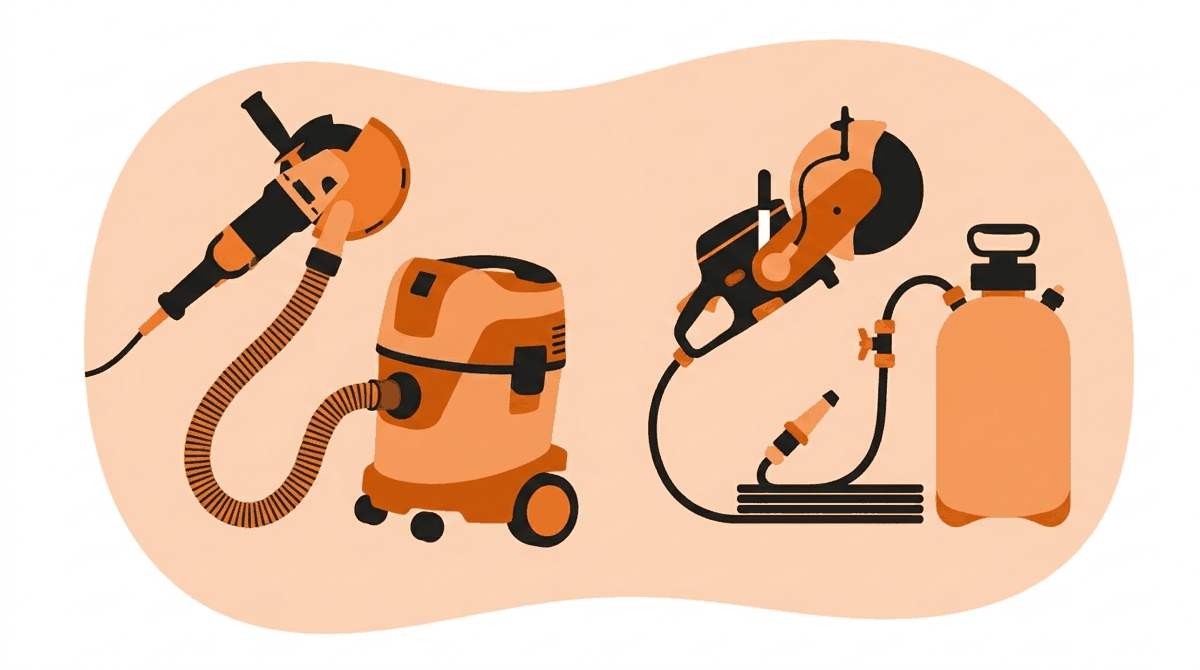
- Table 1 is the shortcut. OSHA’s Table 1 lists common construction tasks — masonry saws, handheld grinders, jackhammers, drills — and the exact controls (water delivery, vacuum dust collection, and when respirators are needed). Follow Table 1 fully and you don’t have to do exposure monitoring for that task.
- Employers must have a written exposure control plan and a designated competent person to implement it.
- Housekeeping restrictions: no dry sweeping or dry brushing of silica dust, and no cleaning clothing with compressed air, where feasible alternatives exist.
- Medical exams are required for workers who wear a respirator under the standard 30 or more days a year.
Silica dust hazards
The everyday tasks that generate dangerous exposure:
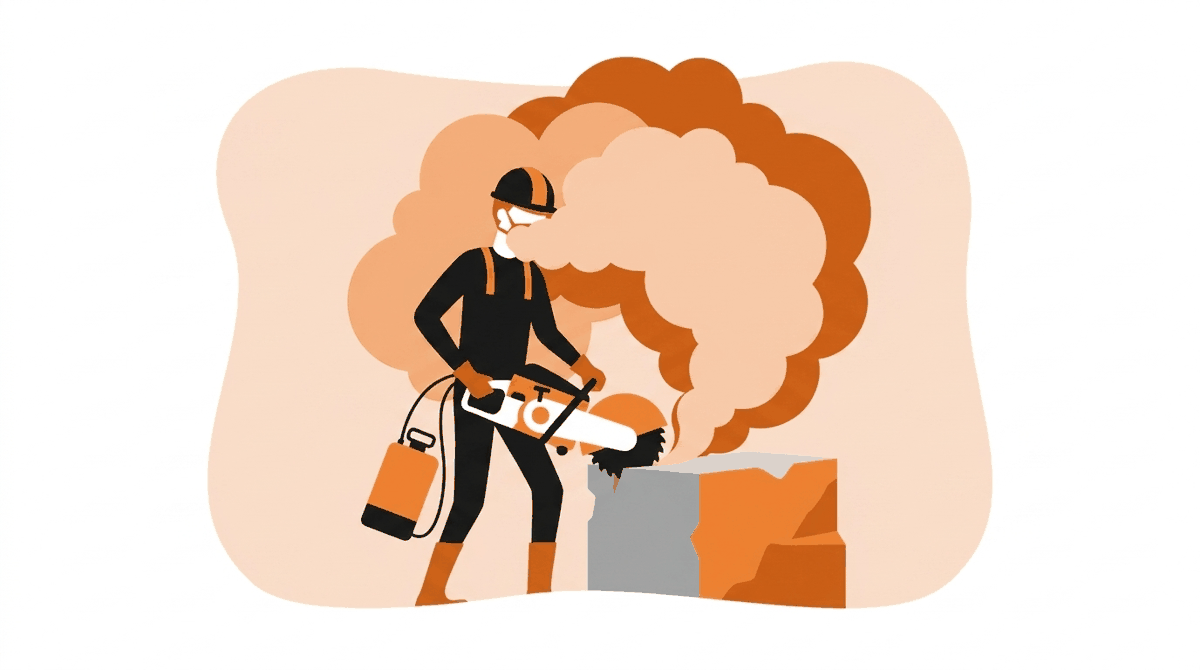
- Dry-cutting concrete, block, or brick with a masonry saw or cut-off saw — the single most notorious silica task in construction.
- Grinding mortar (tuckpointing) — grinding joints without a shrouded, vacuum-equipped grinder produces intense dust right at face height.
- Drilling and coring concrete overhead or into walls, showering the driller with fine dust.
- Jackhammering and chipping slabs and foundations.
- Dry sweeping the slab at the end of the day — resuspending everything the saws produced, into everyone’s breathing zone.
- Abrasive blasting with sand — among the most severe exposures anywhere in industry.
Silica dust toolbox talk
Look at your saws and grinders today, because this talk is about how we use them.
First, understand what we’re up against. By the time you see a dust cloud, you’re standing in millions of respirable particles that scar lungs for good. But here’s the flip side: this hazard dies in a drop of water. Wet the cut, and the dust never becomes airborne. That’s why our rules are simple.
Rule one: water or vacuum on every cut, every grind, every core. If you’re on the masonry saw, the water feed runs — a dry blade “just to finish the cut” is exactly the exposure we’re preventing. Handheld grinders get their shroud and vacuum attached. If the water tank is empty or the vacuum’s full, that’s a reason to stop and fix it, not to push through. Table 1 — the OSHA task chart — spells out the setup for each tool, and our competent person has it. If you’re not sure what your task requires, ask before you cut.
Rule two: respirators where the plan says so. Some Table 1 tasks — long shifts, indoor cutting, jackhammering inside — require a respirator on top of water and vacuum. That means fit-tested, clean-shaven where the mask seals, and worn the whole task. A dust mask hanging around your neck filters nothing.
Rule three: no dry sweeping, no compressed air on your clothes. End-of-day cleanup uses the HEPA vac or wet methods. Blowing yourself off with the airline puts the whole day’s dust back into the air you and your crew are breathing.
You can’t tough out silica. Lungs don’t heal like skin. Use the water, use the vac, wear the respirator when required — and you’ll never meet this disease. Questions?
Questions to employees
Ask your crew — a quick check that the talk landed:
- Which of your regular tasks create respirable silica dust?
- What controls does Table 1 require for the saws and grinders we use?
- Why is dry sweeping banned around concrete dust?
- What should you do if the water feed or vacuum stops working mid-task?
- When does a task require a respirator in addition to wet methods?
- Who is the competent person for silica on this site?
Promote silica dust safety with this email template
Hi [Name],
With concrete cutting scheduled this month, a few reminders from our silica exposure control plan:
- Every saw, grinder, and drill on masonry runs with water delivery or shrouded vacuum — no dry cutting, period
- Follow the Table 1 setup for each task; check with the competent person if unsure
- Respirators are required for the indoor cutting work — fit-tested and worn for the full task
- Cleanup is HEPA vacuum or wet methods only; no dry sweeping or compressed air
Silicosis is incurable but 100% preventable. The controls are on the truck — let’s make sure they’re on the tools.
Thanks,
[Your Name]
Conclusion
Silica dust turns routine concrete work into a source of incurable lung disease — but only when the controls stay in the truck. Wet every cut, capture dust at the tool, wear the respirator when the task calls for it, and never dry sweep. If you can see the cloud, stop and fix the setup. Your lungs have to last as long as your career, and then some.