Scaffold Safety Toolbox Talk


Walk any decent-sized jobsite and you will see scaffolding. We stand on it, stack material on it, and trust it with our lives every single shift. That trust has to be earned every morning, because a scaffold is only as safe as the person who built it, the person who inspected it, and the person standing on it.
OSHA estimates that 2.3 million construction workers — about 65 percent of the industry — work on scaffolds regularly. When a scaffold goes wrong, it rarely goes a little wrong. Planks slide, frames buckle, and workers fall with nothing between them and the ground.
A scaffold doesn’t get safer the longer you stand on it — check it before you climb it.
Why is scaffold safety important?
Falls from scaffolds don’t leave much room for luck. OSHA estimates that meeting its scaffold standards would prevent roughly 4,500 injuries and 50 deaths from scaffold-related incidents every year — a full crew’s worth of lives lost annually to hazards we already know how to control.
And scaffold failures don’t just kill the people standing on them. In October 2019, the Hard Rock Hotel under construction in New Orleans partially collapsed, killing three workers and injuring dozens more. OSHA cited the engineer and ten contractors.
Most scaffold incidents come down to a short list: planking or support giving way, missing guardrails, slips, and falling objects. Every one is preventable with a proper build, a daily inspection, and fall protection where it’s required.
OSHA regulations for scaffolds
The main construction scaffold standard is 29 CFR 1926.451 — General requirements for scaffolds. In plain English, here is what it demands:
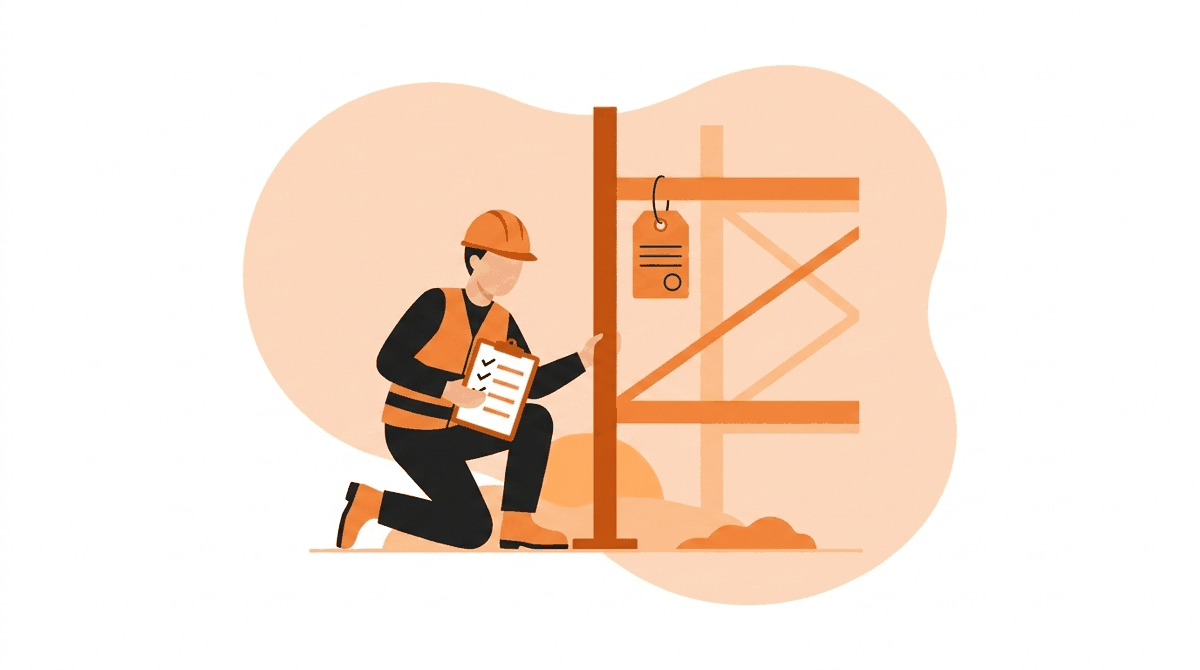
- Capacity. Each scaffold and component must support its own weight plus at least 4 times the maximum intended load (1926.451(a)(1)).
- Full planking. Platforms must be fully planked or decked, with no more than 1-inch gaps.
- Stable footing. Supported scaffolds sit on base plates and mud sills or other firm foundations — never on blocks, buckets or bricks.
- Guardrails or fall arrest. Workers more than 10 feet above a lower level must be protected by guardrails or a personal fall arrest system (1926.451(g)(1)).
- Competent person inspections. A competent person must inspect the scaffold before each shift and after any event that could affect its integrity (1926.451(f)(3)).
- Power line clearance. Keep scaffolds at least 10 feet from energized power lines over 300 volts (1926.451(f)(6)).
- Safe access. Use ladders, stair towers or ramps — never climb cross braces. Our ladder safety talk covers this in detail.
29 CFR 1926.454 also requires that every worker on a scaffold be trained by a qualified person to recognize the hazards involved.
Scaffold hazards
These are the situations that turn scaffolds into incident reports:
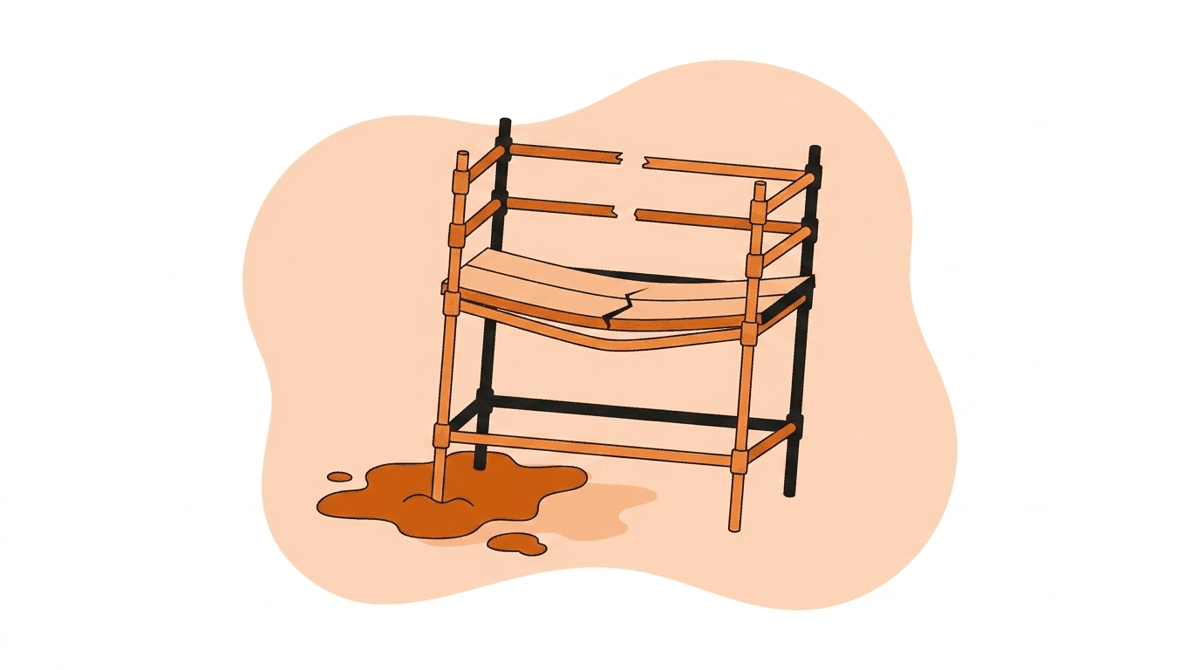
- A crew reuses planks that sat out all winter. One is cracked under the paint. It snaps under a worker carrying a mortar board.
- The scaffold was fine yesterday, but a forklift clipped a leg overnight. Nobody inspects it in the morning, and the platform shifts under load.
- Guardrails were removed to land material and never reinstalled. The next worker up doesn’t know until he steps back.
- A laborer climbs the cross braces “just to grab one thing” instead of walking to the ladder.
- The scaffold is built on frozen mud in the morning. By afternoon it has thawed, and one leg has sunk two inches.
Scaffold safety toolbox talk
Look around — most of us will be on a scaffold at some point today, so let’s talk about it straight.
First: nobody steps onto a scaffold until a competent person has inspected it this shift. Not yesterday. This shift. Things change overnight — weather, deliveries, equipment strikes, somebody borrowing planks. If you haven’t heard that today’s inspection is done, ask before you climb.
Second: use the ladder. I know the cross braces are right there and the ladder is around the corner. Climbing braces is how people fall ten feet before the workday even starts. Same rule coming down — face the ladder, three points of contact.
Third: guardrails stay on. If you have to pull a rail to land material, tie off first, and the rail goes back the moment the load is down. A missing guardrail is a trap for the next person — and that might be you after lunch, when you’ve forgotten it’s gone.
Fourth: watch what you put on the platform. It has a rated capacity, and pallets of block add up fast. Keep it tidy — anything loose on a scaffold deck is one boot-kick away from landing on somebody’s head.
Fifth: if anything looks wrong — a bent frame, a sunken leg, a plank that flexes too much, a wheel that isn’t locked — get off and say something. Don’t work around it. Tag it, report it, and let’s fix it.
A scaffold failure gives you no warning and no second chance. Thirty seconds of checking beats thirty feet of falling.
Questions to employees
Ask your crew — a quick check that the talk landed:
- Who is the competent person responsible for scaffold inspections on this site?
- At what height does OSHA require fall protection on a scaffold?
- What should you do if you find a guardrail missing or a plank that looks damaged?
- Why is climbing cross braces prohibited, even for a quick task?
- What could overload the scaffold platform on our current job?
- What changed on our scaffolds since yesterday’s shift?
Promote scaffold safety with this email template
Hi [Name],
Quick reminder ahead of this week’s work at height: no one steps onto a scaffold until it has been inspected by the competent person for that shift. If you’re unsure whether today’s inspection is done, ask your supervisor before climbing.
Three things I need from everyone on scaffolds:
- Use the ladder or stair tower — never climb the frames or braces.
- Keep guardrails in place. If a rail comes off to land material, it goes straight back on.
- Report anything that looks off — damaged planks, sunken legs, missing pins — immediately.
If a scaffold doesn’t look right, stay off it and flag it. No task is urgent enough to gamble on.
Thanks for keeping each other safe,
[Your Name]
Conclusion
Scaffolds put millions of workers at height every day, and the difference between routine and tragedy is a handful of habits: a real inspection every shift, guardrails that stay put, proper access, and the discipline to stop when something looks wrong. Build it right, check it daily, and treat every platform like your life depends on it — because it does.
References and Further Reading
- OSHA — Scaffolding overview
- 29 CFR 1926.451 — General requirements for scaffolds
- 29 CFR 1926.454 — Scaffold training requirements
- OSHA Scaffolding eTool
- Hard Rock Hotel collapse citations — our coverage of the 2019 New Orleans disaster
- Fall protection safety talk