Near-Miss Reporting Toolbox Talk: Free Lessons, If You Take Them


A load swings past a worker’s head and nobody gets touched. A scaffold plank cracks but holds. A forklift and a laborer arrive at the same blind corner half a second apart. On most sites, all three end the same way: a deep breath, a nervous laugh, and everyone back to work.
That’s a tragedy in slow motion. A near miss is an incident that already happened — the hazard was real, the sequence ran, and the only thing missing was the injury. Luck filled the gap this time, and luck doesn’t repeat on command. Sites that treat close calls as free lessons fix hazards while fixing them is cheap. Sites that shrug them off learn the same lesson later, at full price.
A near miss is the incident report the injury version of you never got to file.
Why is near-miss reporting important?
OSHA’s Recommended Practices for Safety and Health Programs puts it plainly: employers should investigate not just injuries but also “close calls/near misses, in which a worker might have been hurt if the circumstances had been slightly different” — because incidents and near misses share the same root causes. Find the cause after a near miss and you fix it for free. Find it after an injury and someone already paid.
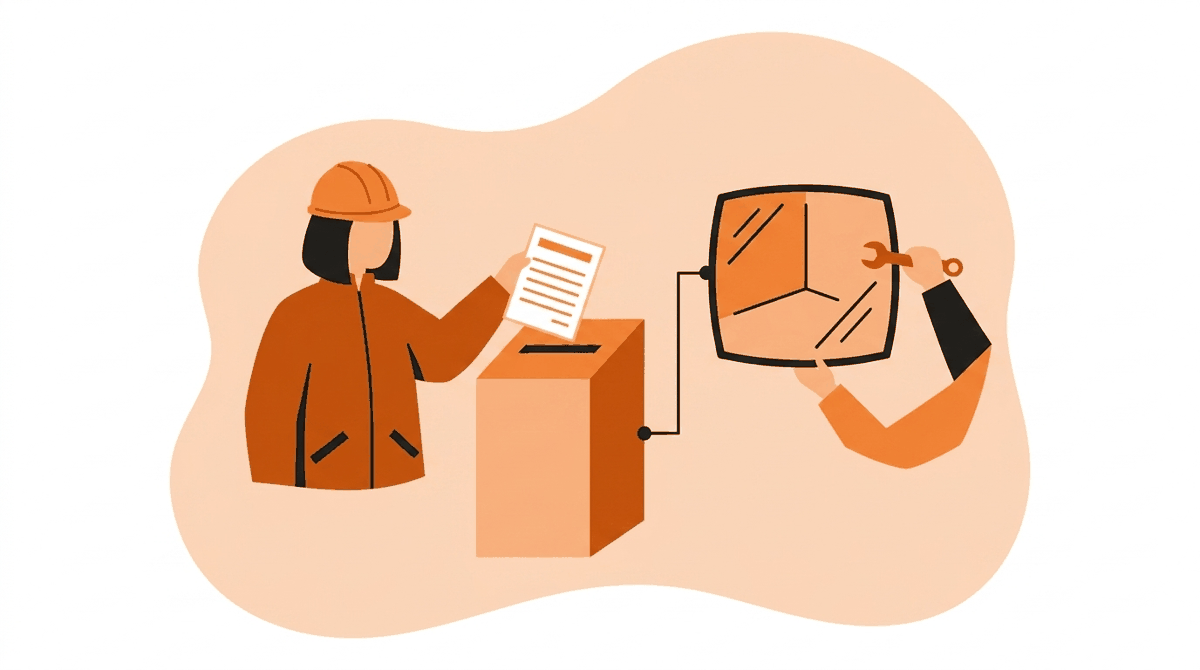
Every close call is direct evidence of an unsafe condition, an unsafe act, or both — captured at the moment it’s most visible and least expensive. The catch: near misses only teach if they’re reported, and reporting only happens where workers know it won’t be punished. The moment a close call earns someone a chewing-out, the reports stop and the site goes blind. For examples of what’s worth writing up, our guide to near-miss reporting examples walks through real ones.
OSHA regulations for near-miss reporting
Here’s the legal picture in plain English:
- Near misses are not OSHA-recordable. The recordkeeping rule, 29 CFR 1904, covers injuries and illnesses meeting certain criteria — a near miss with no injury doesn’t go on your OSHA 300 log, so reporting one creates no regulatory paperwork.
- But investigation is strongly recommended. OSHA’s incident investigation guidance calls for investigating near misses with the same root-cause seriousness as injuries — every close call is a warning of program weaknesses.
- Retaliation is illegal. Under Section 11(c) of the OSH Act, workers cannot be punished for reporting safety concerns — and a near-miss report is exactly that.
- Reporting procedures must not deter. OSHA’s recordkeeping rule requires procedures that are reasonable and don’t discourage reporting (29 CFR 1904.35).
The rulebook’s message: no red tape, no reprisal, no excuse not to report.
Near-miss hazards
The hazard isn’t the near miss — it’s what happens when near misses go unreported:
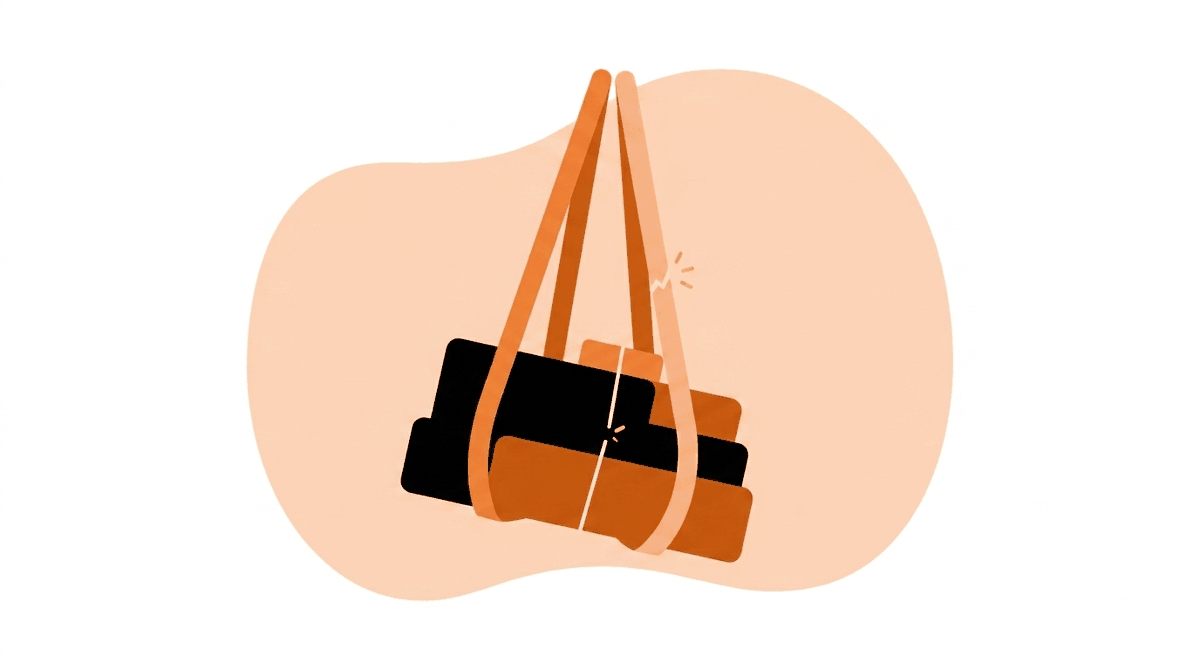
- A sling with a hidden cut holds a load — barely. Nobody says anything. Three weeks later the same sling is on a heavier pick.
- A worker slips on the same oily patch two others slipped on this month. Each caught themselves, so the leak was never fixed.
- The excavator swings within a foot of a laborer in a blind spot. No report means no exclusion zone, so the geometry repeats daily.
- An extension cord trips a breaker with a small pop. It gets reset instead of reported; the damaged cord stays in the rotation.
- A dropped wrench lands two feet from a finisher. “Heads up next time” is the entire corrective action.
Near-miss reporting toolbox talk
I want to change what happens in the ten seconds after somebody on this crew says “whoa — that was close.”
Right now the instinct is to shake it off and get back to work. Maybe we’re embarrassed. Maybe we figure no harm, no foul. Maybe we don’t want the hassle or to get anybody in trouble. I get all of that. But a near miss is the exact same event as an injury, minus the luck. Same hazard, same sequence, same causes. The universe just ran the accident with the harm switched off and showed us precisely where the problem is. That’s a gift — wasting it should bother us more than reporting it does.
So here’s what I’m asking. When you have a close call, or see one, report it that day. Tell me, tell your lead, or write it on the near-miss form — thirty seconds, three things: what happened, where, and what you think caused it. You don’t need to be right about the cause. You just need to get it in front of us.
Now my side of the deal, and I mean this: nobody gets in trouble for reporting a near miss. Not the reporter, not the person involved. Even if the close call came from your own mistake, telling us is exactly the behavior we want. What we do with reports is fix things: the blind corner gets a mirror, the bad sling gets cut up, the staging area gets moved. And I’ll close the loop so you see your report changed something.
One more thing: “that was close” said out loud is good — but it evaporates by lunch. Written down, it protects the guy who’s here next week. Report it.
Questions to employees
Ask your crew — a quick check that the talk landed:
- What is a near miss, and how is it different from an injury incident?
- Has anyone had a close call in the last month that never got reported? What happened?
- What stops people from reporting near misses on this site — honestly?
- Can you be disciplined for reporting a near miss here? What about one you caused yourself?
- What information should a near-miss report include?
- What’s a near miss you’ve heard about that later became a real injury?
Promote near-miss reporting with this email template
Hi [Name],
Our position on near misses is simple: every close call is a free warning, and I want every one reported.
- Report any near miss the same day — to me, your lead, or on the near-miss form. What happened, where, and what you think caused it.
- No one will ever be disciplined for reporting a near miss, including close calls involving your own mistakes. That’s a promise.
- Every report gets looked at, and I’ll tell you what changed because of it.
The hazards behind near misses are the same ones behind injuries. Help us find them while they’re still free lessons.
Thanks,
[Your Name]
Conclusion
A near miss is the cheapest safety lesson you will ever be offered: the full incident with the injury left out, pointing straight at a fixable cause. The sites that get hurt least are the ones that report the most. Say it, write it, fix it. Luck is not a safety program.

