Workplace Disasters That Changed Safety Law


Nearly every major American safety rule was written after workers died. The Triangle Shirtwaist fire produced modern exit laws, the Farmington mine explosion cleared the way for the OSH Act, Phillips 66 gave us process safety management, and the Hamlet fire put a plant owner in prison for locked doors. Here are seven disasters that changed safety law.
Safety professionals sometimes say that OSHA regulations are “written in blood.” It is not an exaggeration. Behind almost every standard in the rulebook is a specific day when things went catastrophically wrong. Knowing these stories makes the rules easier to teach — and much harder to shrug off. Use them in your next toolbox talk, alongside our list of the biggest OSHA fines in history.
Triangle Shirtwaist Factory Fire (1911): Locked Exits Become Law
On March 25, 1911, fire tore through the Triangle Waist Company’s garment factory in New York City. 146 workers died — most of them immigrant women and girls as young as 14 — from fire, smoke, and jumping from the ninth floor. The owners kept the steel exit doors locked to prevent what they saw as interruptions of work; only a foreman had the key, and the single flimsy fire escape collapsed.

Public outrage created the New York Factory Investigating Commission, whose work produced more than 30 new health and safety laws — fire codes, egress requirements, child labor limits — that became the template for workplace safety law nationwide. Frances Perkins, who witnessed the fire, later became FDR’s Secretary of Labor and carried its lessons into federal policy. Every unlocked, unblocked emergency exit in your building traces back to this day.
Farmington Mine Disaster (1968): The Road to the OSH Act
In the early morning of November 20, 1968, an explosion ripped through the Consol No. 9 coal mine near Farmington, West Virginia. Of the 99 miners underground, 21 escaped; 78 died, and 19 bodies were never recovered. Television footage of the burning mine brought the danger of American workplaces into every living room.
Congress responded with the Federal Coal Mine Health and Safety Act of 1969 — dramatically stronger standards and inspections for mines — and the political momentum carried straight into the Occupational Safety and Health Act, signed December 29, 1970. OSHA itself, in other words, is partly Farmington’s legacy. Read more in our short history of OSHA.
Hawks Nest Tunnel (1930–31): The Silicosis Awakening
While drilling a hydroelectric tunnel through nearly pure silica rock at Gauley Bridge, West Virginia, thousands of workers — three-quarters of them Black migrant laborers — breathed silica dust with no protection and developed acute silicosis within months. The death toll is disputed to this day: the company admitted 109 deaths, 1936 congressional hearings counted 476, and a modern epidemiological estimate puts it at around 764. Witnesses told Congress that company officials wore masks when visiting the tunnel while refusing to provide them to the men who asked.
Hawks Nest forced national recognition of silicosis as an occupational disease and drove state compensation laws — the long backdrop to OSHA’s modern respirable crystalline silica standard, finalized in 2016.
Kepone Poisoning at Hopewell (1975): The Price of Weak Penalties
At a converted gas station in Hopewell, Virginia, Life Science Products manufactured the pesticide Kepone under contract to Allied Chemical. Investigators identified 76 workers with Kepone poisoning, 29 of whom were hospitalized with tremors so severe they were nicknamed “the Kepone shakes.” A state epidemiologist who visited in July 1975 ordered the plant closed on the spot.
OSHA’s response exposed how toothless the era’s penalties were: four violations and $16,500 in proposed fines for a mass poisoning. A federal judge later fined Allied Chemical $13.4 million in the criminal case, and the scandal helped propel the Toxic Substances Control Act of 1976. It remains the classic argument for why chemical hazard training cannot wait for a regulator to show up.
Phillips 66 Pasadena Explosion (1989): Process Safety Management Is Born
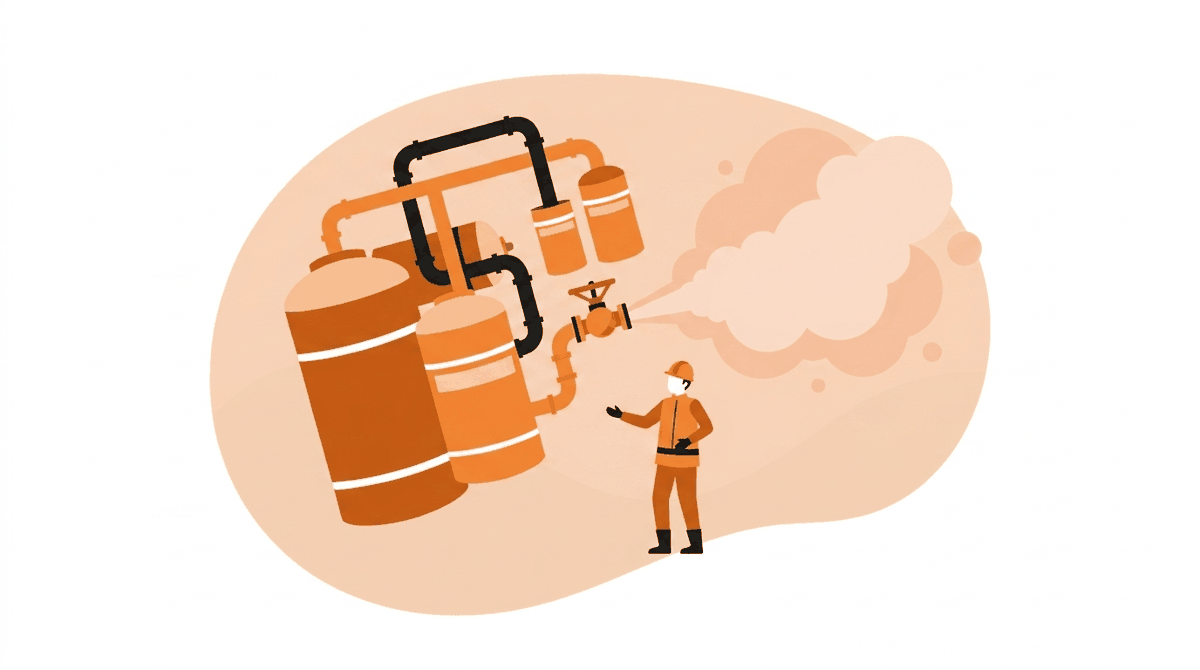
On October 23, 1989, during maintenance at the Phillips 66 Houston Chemical Complex in Pasadena, Texas, an open valve released roughly 85,000 pounds of flammable process gas in seconds. The vapor cloud ignited and the explosions killed 23 workers and injured 314. OSHA proposed $5.7 million in penalties against Phillips — 566 willful violations — and $729,600 against a maintenance contractor.
The direct regulatory result was one of OSHA’s most consequential rules: the Process Safety Management standard (29 CFR 1910.119), finalized February 24, 1992, which requires refineries and chemical plants to systematically analyze and control the hazards of highly hazardous chemicals.
Imperial Food Products Fire, Hamlet (1991): Locked Doors, Again
Eighty years after Triangle Shirtwaist, history repeated itself in a chicken processing plant in Hamlet, North Carolina. On September 3, 1991, a failed hydraulic line sprayed fluid onto a fryer and the plant burned. 25 workers died and 54 were injured — many found piled at fire doors that the owner had ordered locked. The plant had operated for 11 years without a single safety inspection, with no sprinklers, no fire alarm, and no fire drills.
North Carolina issued an $808,150 penalty — then the highest in state history — and owner Emmett Roe pleaded guilty to 25 counts of involuntary manslaughter, drawing a sentence of nearly 20 years. The state overhauled its OSH program and hired waves of new inspectors, and egress enforcement became a national priority. If your evacuation routes have never been walked, start with our emergency exits talk.
Imperial Sugar Explosion (2008): Combustible Dust Gets Serious
On February 7, 2008, sugar dust ignited inside an enclosed conveyor beneath the silos at the Imperial Sugar refinery in Port Wentworth, Georgia. Secondary explosions fueled by years of accumulated dust swept through the packing buildings, killing 14 workers and injuring 36. OSHA proposed $8.77 million in penalties — at the time the third-largest in its history.
Weeks after the blast, OSHA reissued a far stronger Combustible Dust National Emphasis Program, and the Chemical Safety Board renewed its call for a comprehensive dust standard — one that still does not exist. Dust keeps killing: see our reports on the Horizon Biofuels explosion and the criminal convictions after the Didion Milling blast.
Conclusion
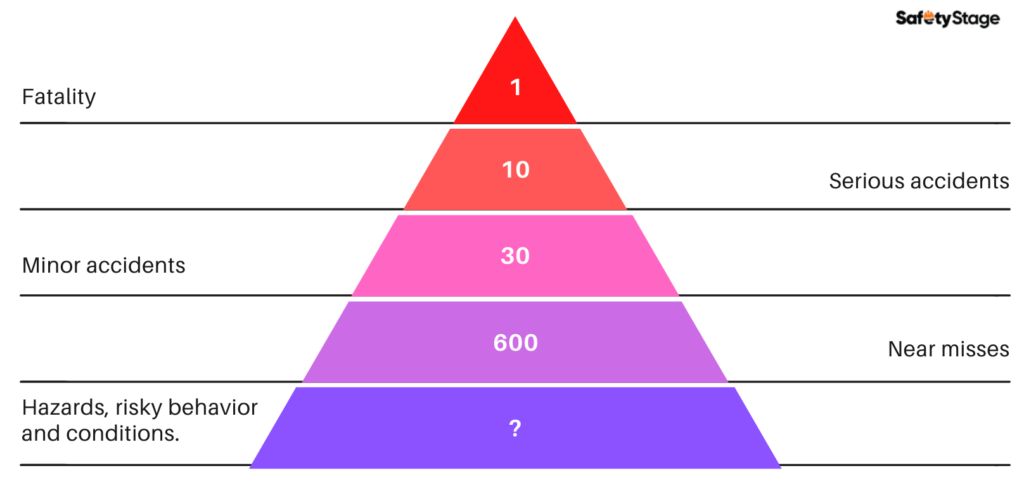
Every one of these disasters was preventable, and every one produced a rule that now protects millions of workers. The pattern is always the same: known hazards, ignored warnings, and reforms that arrive only after the funerals. The job of a safety leader is to break that pattern locally — treat near misses as the warning the law never needed, and fix hazards while they are still cheap. History is the best safety talk you will ever give.
References and Further Reading
- The Triangle Shirtwaist Fire — AFL-CIO Labor History
- Cornell University’s Triangle Fire Archive
- MSHA: The Federal Coal Mine Health and Safety Act of 1969
- Encyclopedia Virginia: Kepone
- OSHA Process Safety Management Standard (29 CFR 1910.119)
- CSB Final Report: Imperial Sugar Refinery Explosion
- The Biggest OSHA Fines in History
- What Are the Types of OSHA Violations?